
What Does an Elopement Day Actually Look Like?
There is no standard elopement timeline. Two real stories show how portraits, reportage, travel, pauses and changed plans can belong to the day.
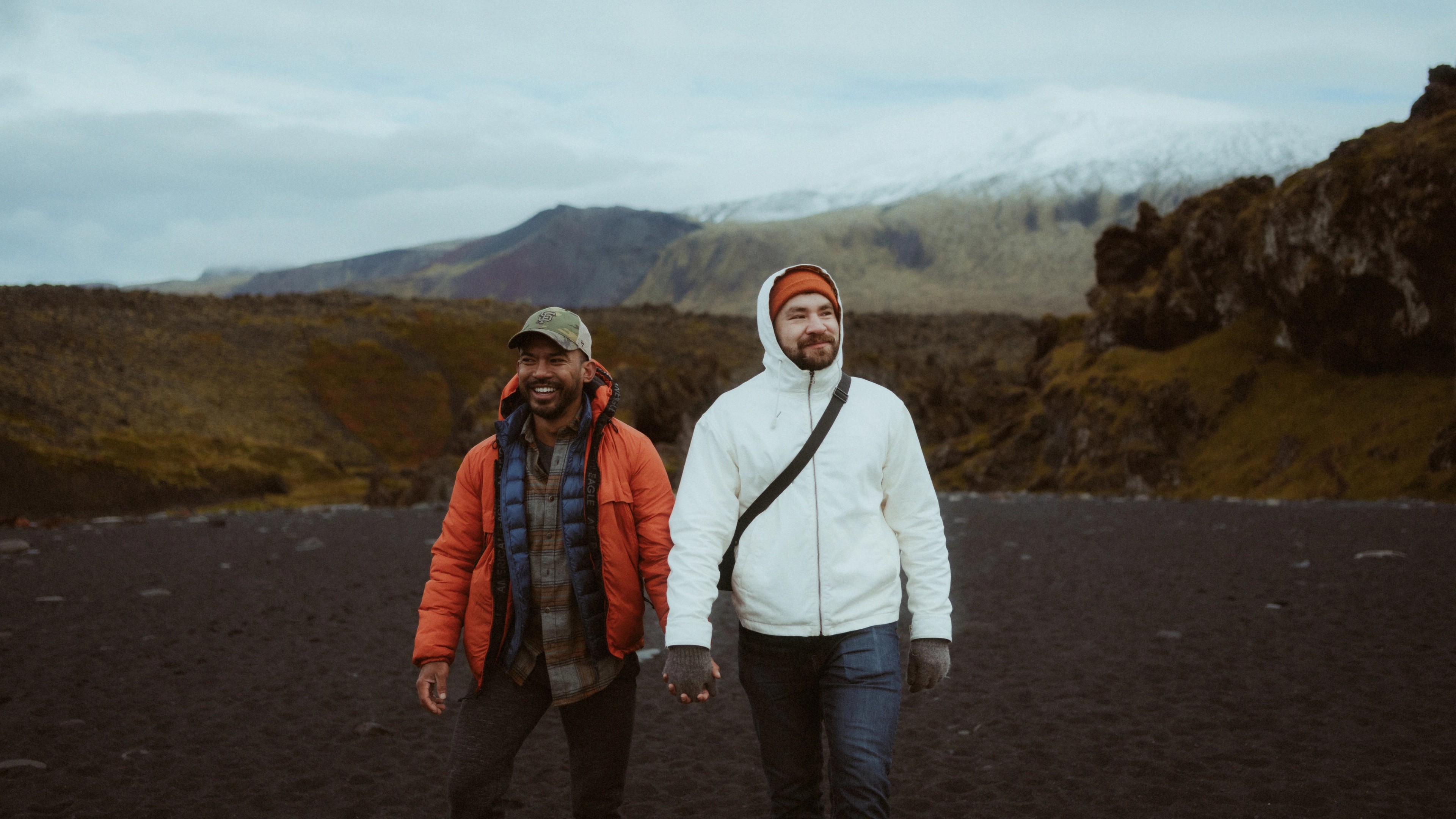
The wave reached Ilya before any of us had time to decide whether it was a problem. His feet were soaked. I felt terrible. He seemed considerably less bothered.
Did that ruin the plan? No. We had no appointment waiting for us and no group of people wondering where we were. We could deal with wet shoes and carry on.
That is one possible elopement day.
Another can be a long portrait session. It can have a ceremony, a precise schedule and several places to be. It can also have almost no schedule at all. You can walk for hours, drive somewhere because the light changed, stop for food, wait for the weather or spend part of the afternoon reading.
Reading may not create the most dramatic photographs. You are still allowed to do it.
There is no standard elopement day hiding behind the word. That freedom is the point, but freedom does not always look spontaneous. Sometimes it means planning carefully. Sometimes it means leaving space between a few clear decisions. Sometimes it means realising that one day is not the right container.
Four days, because one day did not need to hold everything
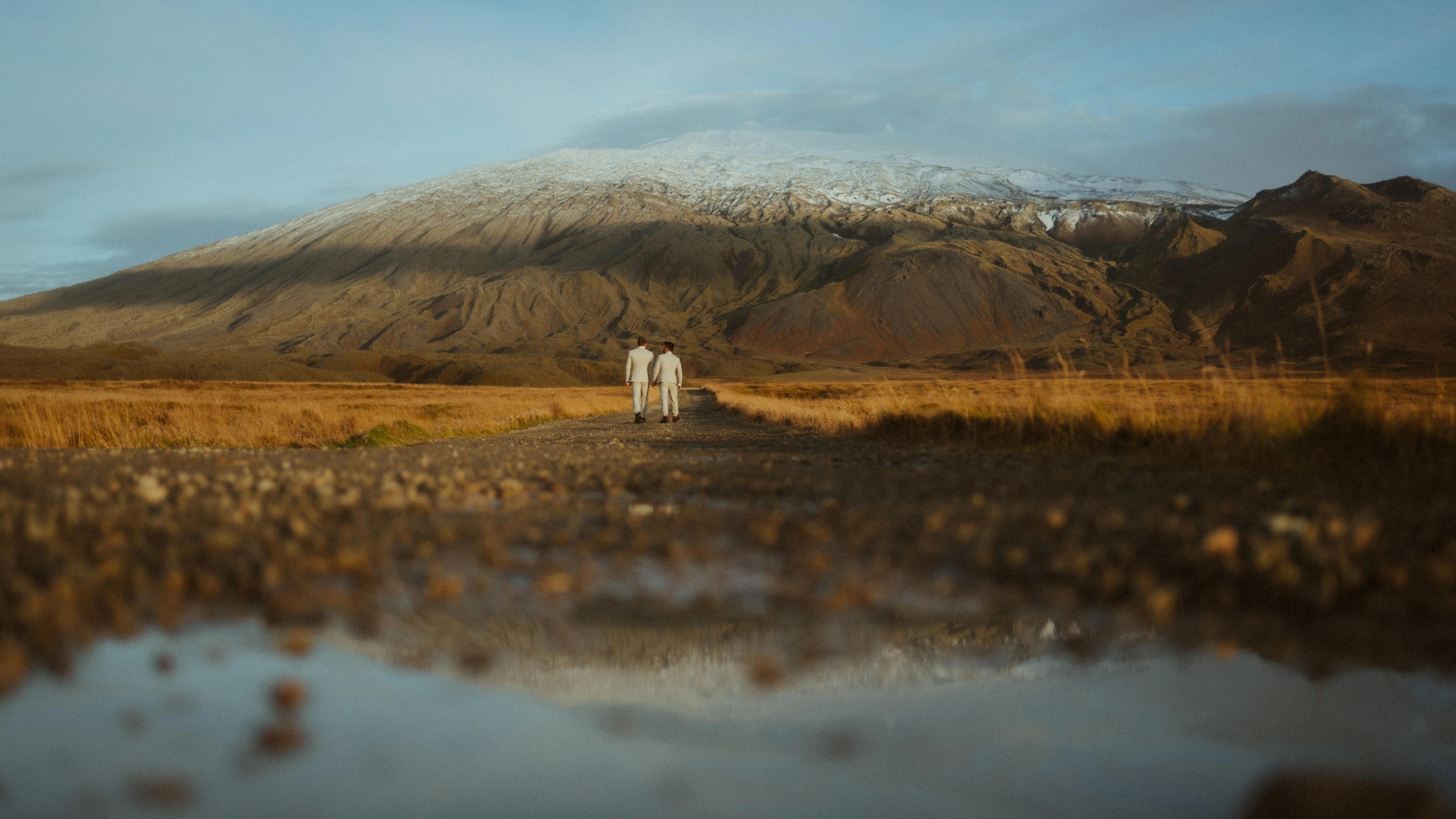
Kris and Ilya spread their multi-day elopement across four days in Copenhagen and Iceland.
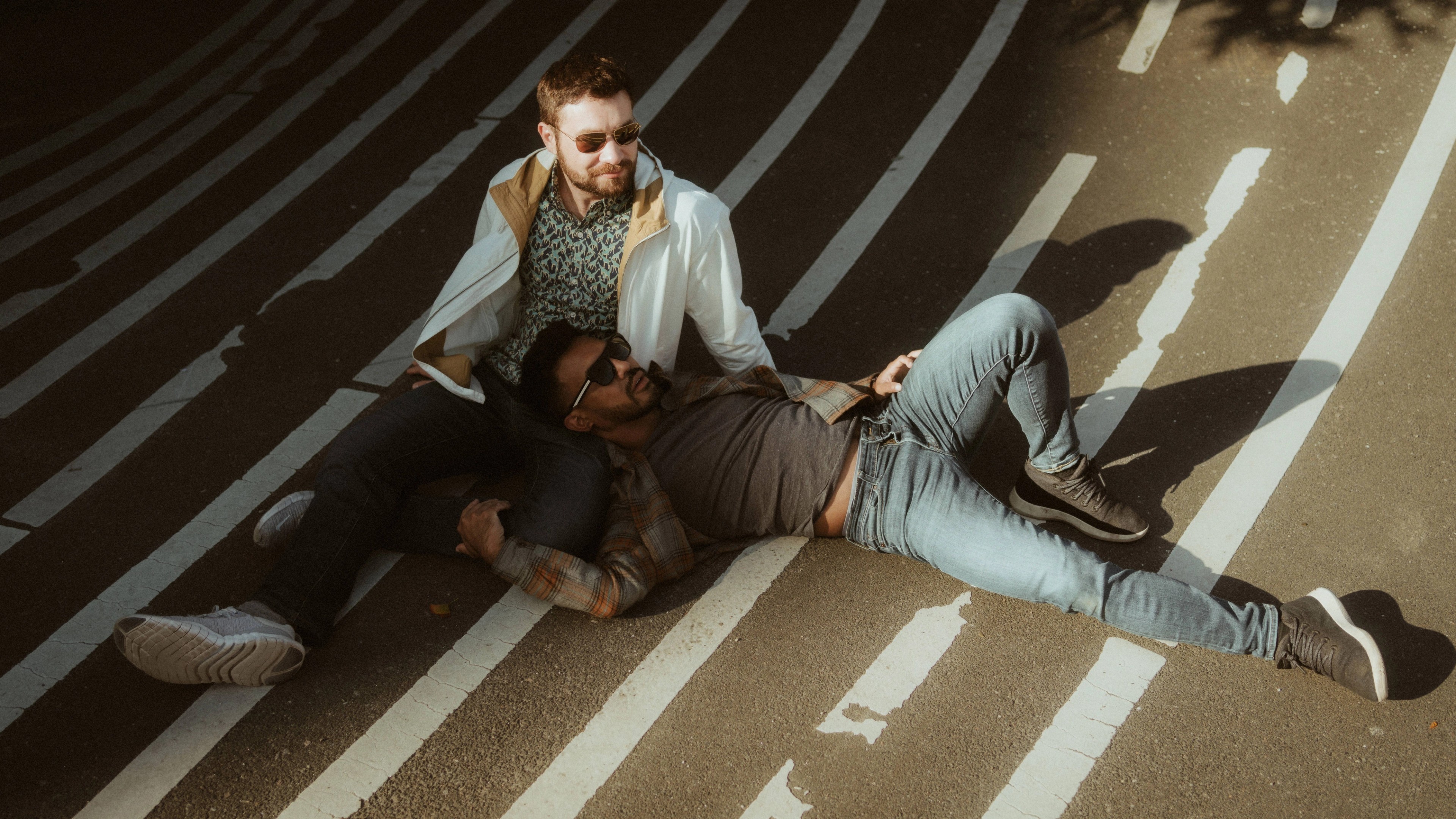
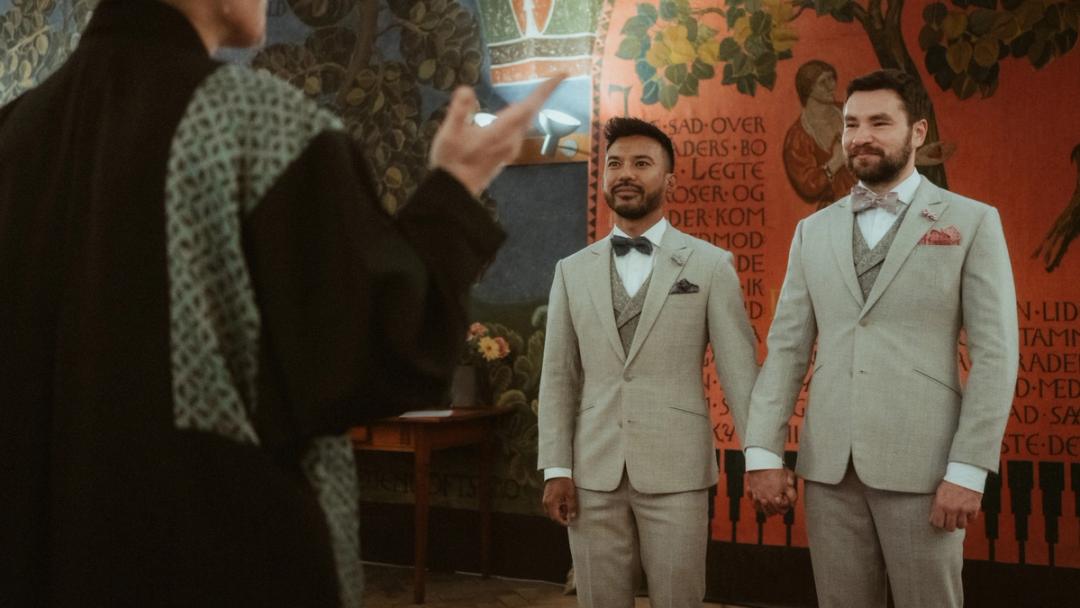
On the first day, we made more deliberate and creative portraits around Superkilen in Copenhagen. The next day was their wedding. I was there for the morning in their hotel room, the legal ceremony and what happened around it. A few days later, we met again for two days on the Snæfellsnes Peninsula.
Those days did not all have the same photographic job.
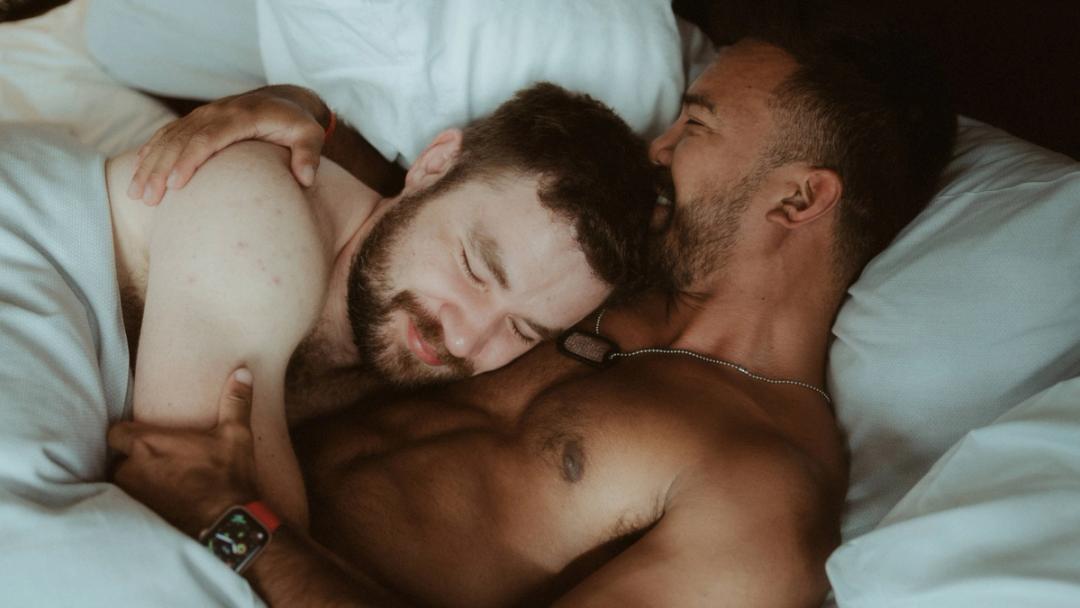
The first portrait session gave us room to try things without asking a wedding day to carry every visual idea. By the next morning, none of us was beginning from zero. We already knew one another a little better. The camera had already been present. The images in the hotel bed could happen because the situation no longer felt entirely new.
The wedding could then remain a wedding. I could observe what was happening without trying to turn every part of it into the portrait session we had already made.
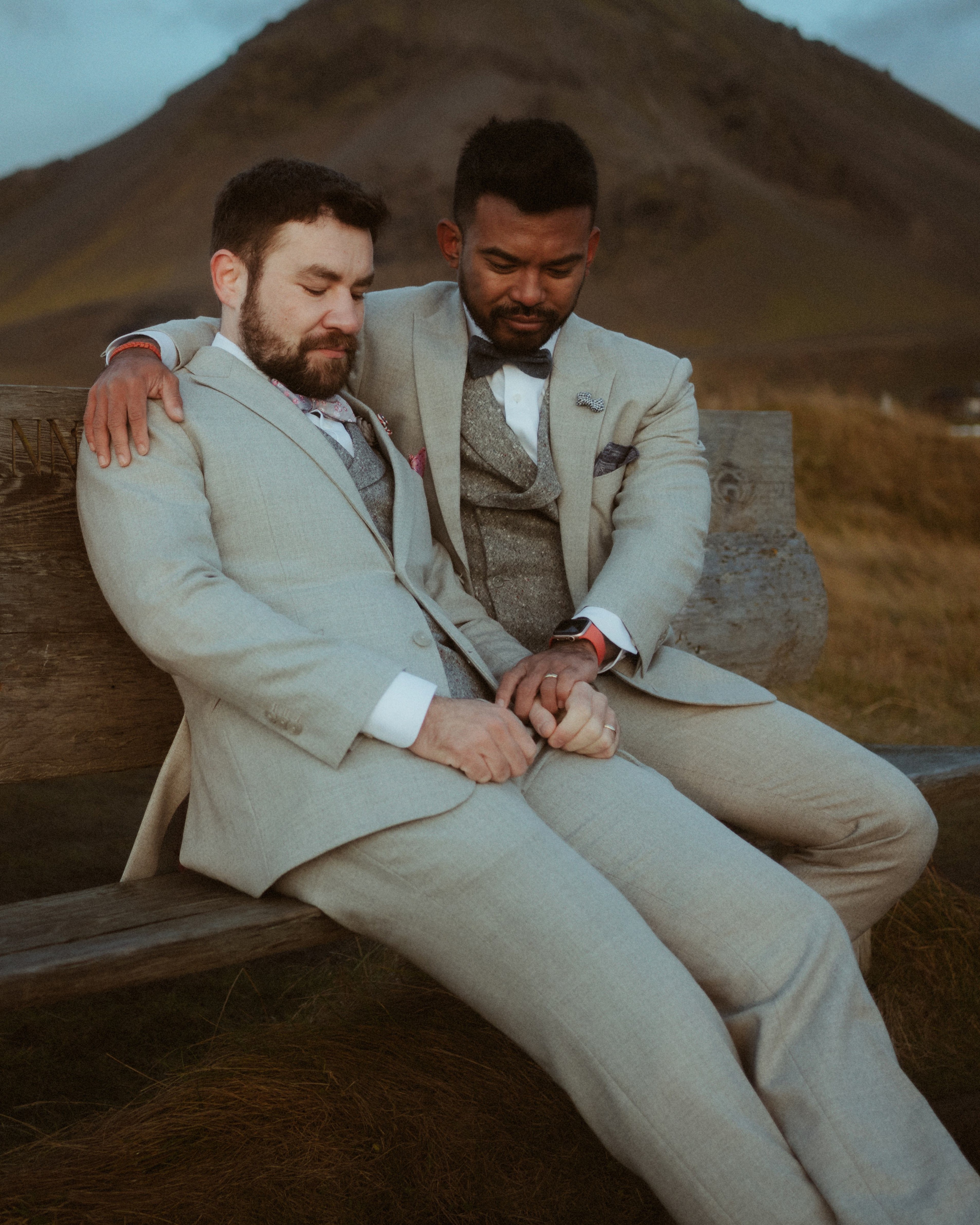
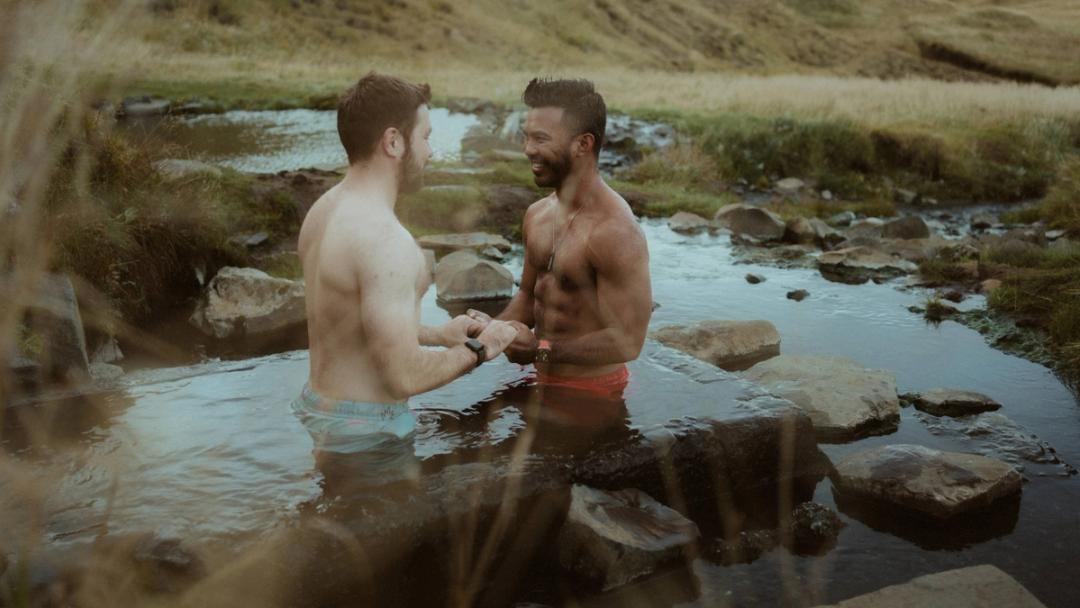
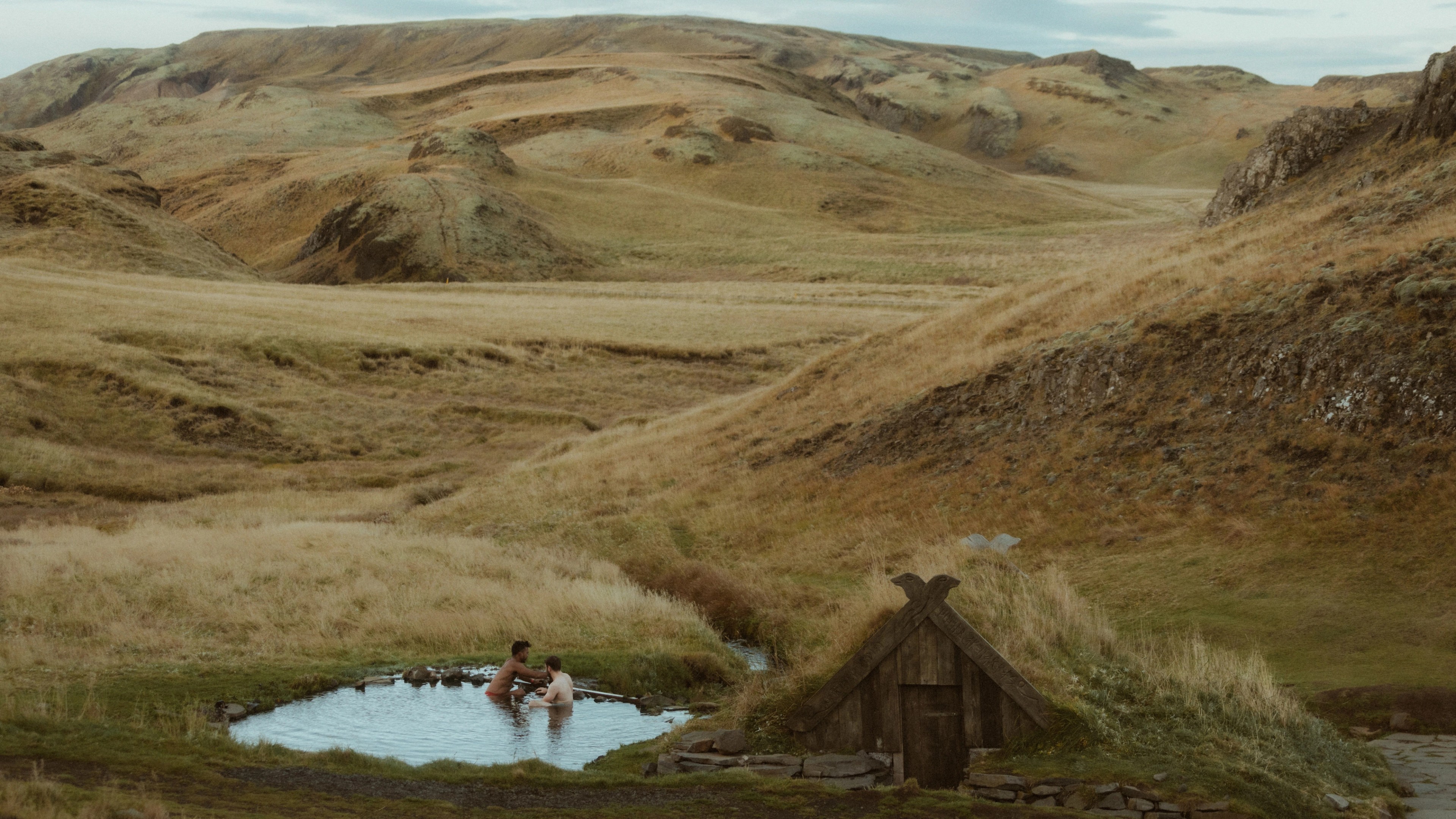
Iceland gave us something else again: different places, clothes and weather, long drives, food breaks and enough time for an idea not to work. We could go somewhere else without treating the distance as a problem. When the wave soaked Ilya's feet, my first reaction was that I had fucked this up. Then we dealt with it and kept going.
Kris read about a hot spring and suggested it for the next day. We changed the plan and went. When we arrived, nobody else was there.
This was not freedom because nothing had been planned. Flights, accommodation, a legal ceremony and four days together require planning. The freedom came from not making every part compete for the same few hours.
An elopement does not have to become a photoshoot
Some couples genuinely want to spend hours making portraits. I like that. A portrait-heavy elopement is not less honest because we built parts of it deliberately.
When I make creative portraits, I give direction. I might ask two people to stand in a particular place or walk along a certain line. What happens after that belongs partly to them. They respond to one another, misunderstand me, laugh, become quiet or do something I would not have invented.
The movement between direction and observation is fluid. I can construct a starting point and then stop controlling what grows from it.
Other parts of a day need very little from me. I can stay with a conversation, a meal or the beginning of a quiet pause and then put the camera down. Not every minute has to become material. Time without images is not time missing from the story.
That is one reason a full elopement day is different from booking a portrait session and adding a ceremony around it. The day asks for several kinds of attention. Some portraits are constructed. Some moments are found. Others remain with the couple.
What can actually be part of an elopement day?
Potentially, almost anything that belongs to the two people living it.
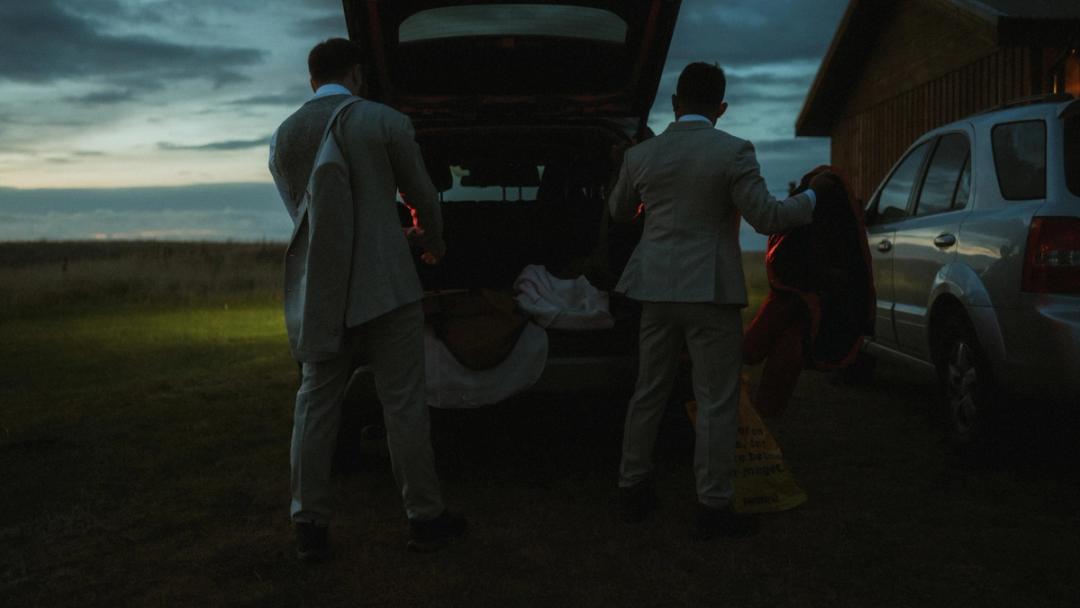
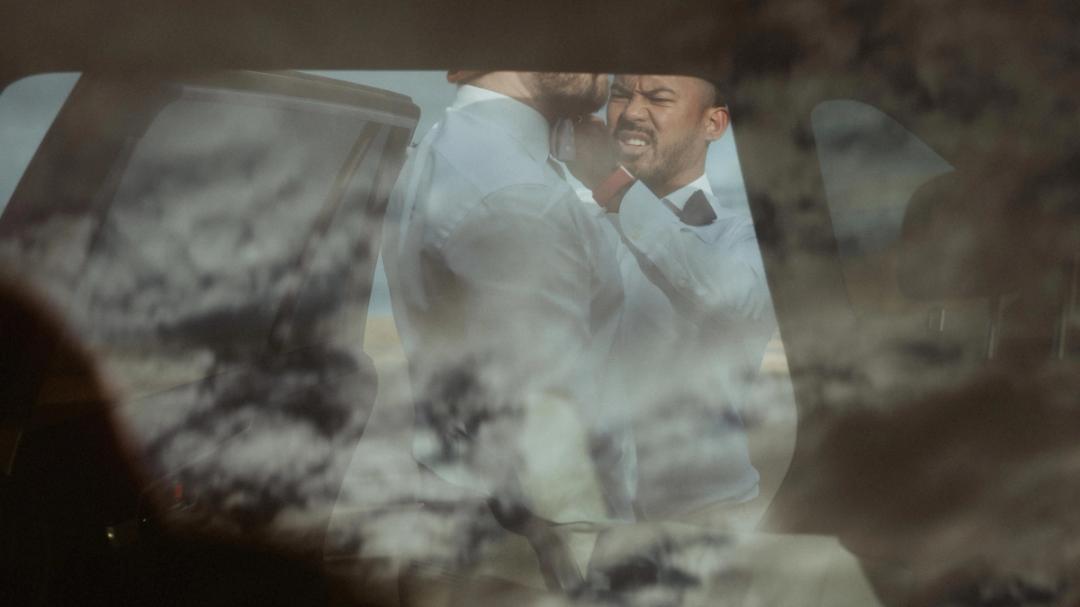
There may be getting ready, a legal ceremony, private vows, portraits, long walks and a dinner reservation. There may also be a train ride, wet shoes, takeaway food, changing clothes beside a car, reading in bed, getting lost, waiting for fog to move or deciding that nobody wants to do the next idea.
These are not activities that every couple should copy. They are not a checklist for making the day meaningful. A quiet breakfast is only useful if you want a quiet breakfast. A mountain is not automatically more personal than your own street.
The useful planning question is not, “How do we fill eight hours?”
It is, “What would we actually like to spend this time doing?”
An elopement timeline can still help. Its job is to make the day visible before it exists, not to control every hour. Morning in the hotel. A ceremony. Lunch. A drive. Nothing scheduled for a while. Once the whole day has a shape, the question changes. It is no longer only how many hours of photography you need. It becomes which parts you actually want to live.
For one couple, the answer may be a demanding route and hours of portrait work. For another, it may be a city ceremony, lunch and an afternoon with nowhere else to be. Some people feel safer with a detailed plan. Others need only a few anchors, perhaps the ceremony, a place and a rough direction, with space between them.
Freedom includes structure when structure helps.
Two example timelines, neither of them a rule
Kris and Ilya's four days are one real example:
- Day one: creative portraits around Superkilen in Copenhagen
- Day two: morning at the hotel, legal ceremony and reportage around the wedding
- Days three and four: travelling and making portraits together in Iceland, with long drives, food breaks and room for spontaneous ideas
A summer day could have a completely different rhythm:
- portraits around sunrise if the couple wants softer light or a quieter place
- breakfast, getting ready or time without the camera
- a ceremony and whatever belongs around it
- lunch, rest or a change of location while the sun is high
- documentary time in the afternoon
- more portraits towards sunset, if the couple wants to use the lower evening light
Direct midday sun can leave strong shadows beneath the eyes and nose. That may be a reason to pause portrait work, find shade or use the hard light deliberately. We talk about the consequence. The couple does not have to build the whole day around it.
Every elopement timeline should be made for the people, the place, the season and what matters to them. If a couple wants to be in Venice but does not want crowds in their photographs, an early-morning window may become the main anchor. We might make portraits while the city is quieter and leave the busier part of the day alone. A couple who hates getting up early needs a different answer.
These timelines show possibilities. They are not instructions.
Weather changes the day. It does not decide whether it worked.
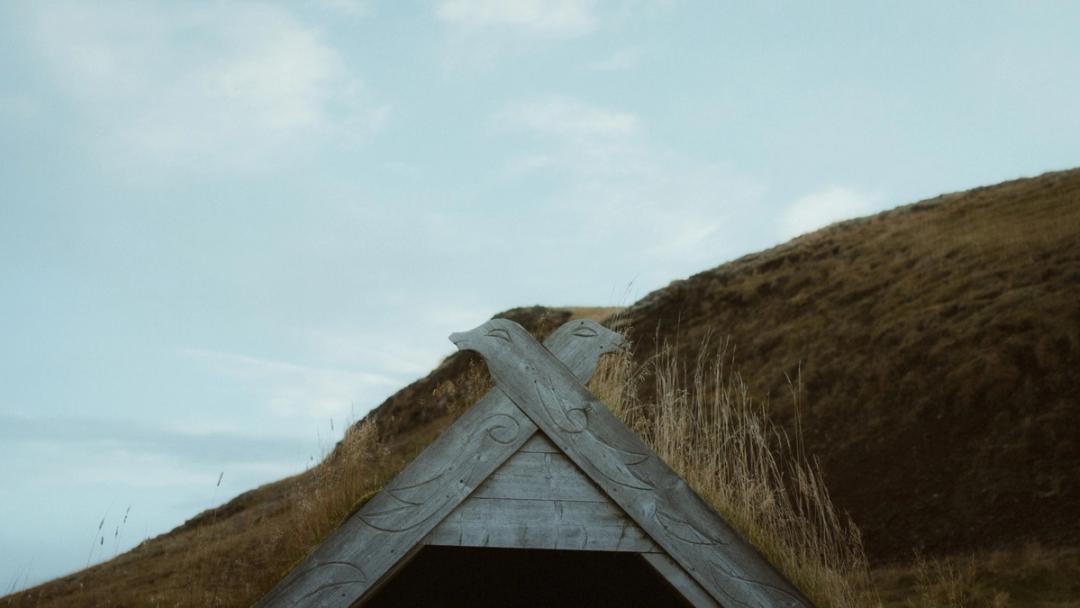
Weather affects where we can go, how long we stay and how the images feel. It can remove a view, open another possibility or make the sensible decision very obvious.
It does not automatically decide whether an elopement was successful.
The wave that reached Ilya became part of the day. In the Dolomites, fog hid the mountains from Jana and Steffen for almost the entire time we were there. Neither situation needs to be rewritten as a perfect accident. Wet feet can be annoying. A missing view can be disappointing.
A real day is allowed to contain both.
Sometimes freedom means changing almost everything
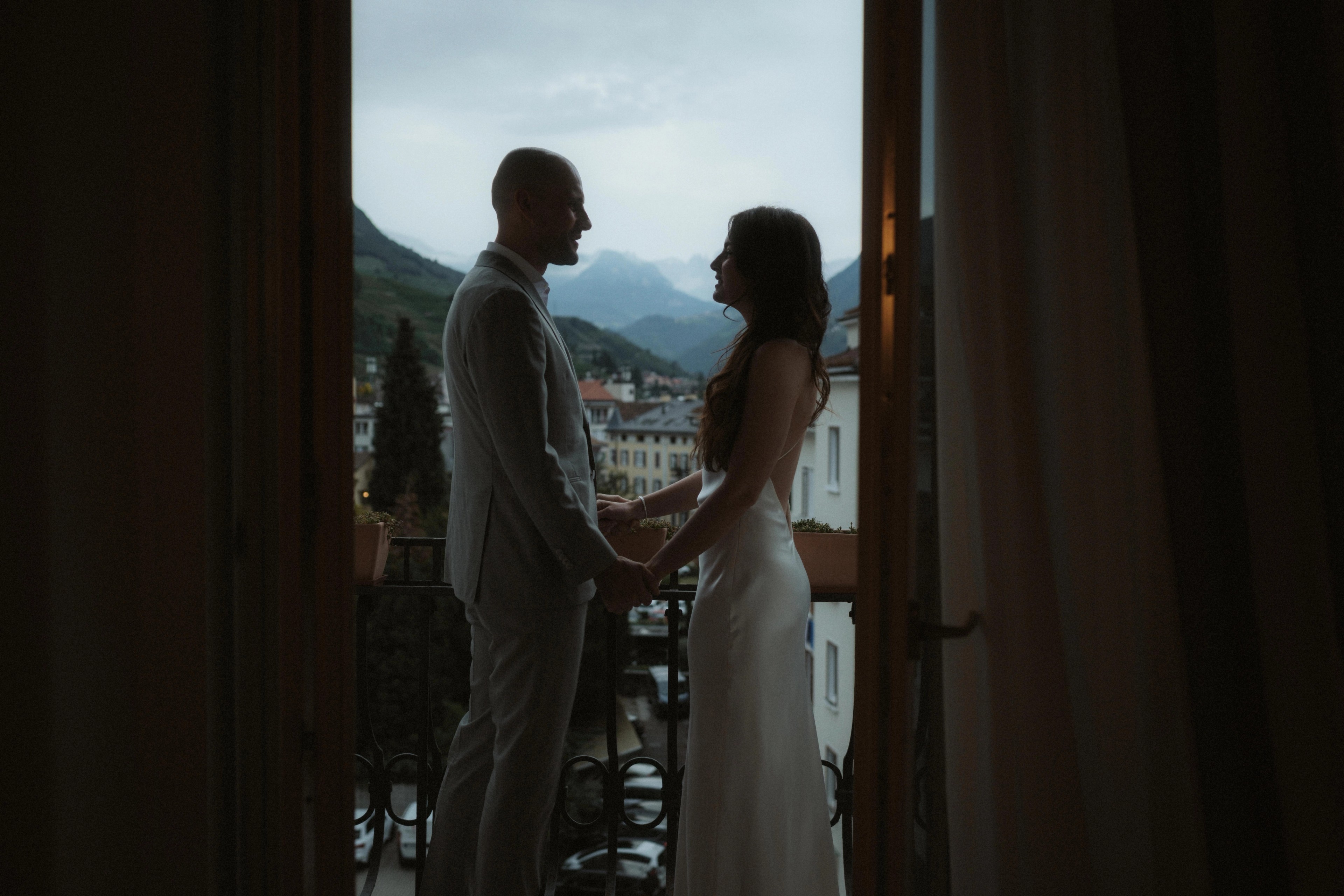
Jana and Steffen had planned two days in the Dolomites, including a climb, a night at Tierser Alpl and private vows in the mountains.
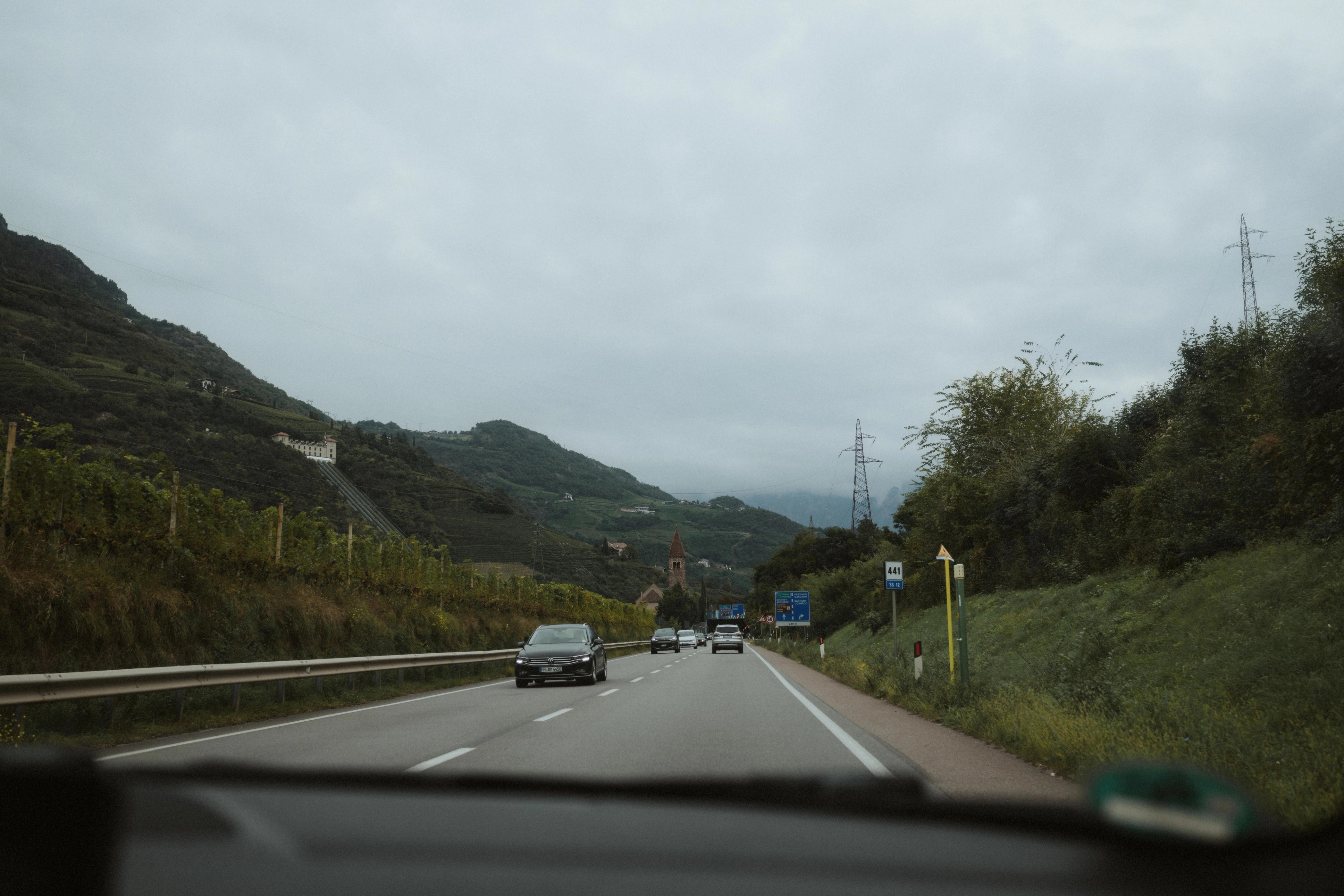
We had already begun at their hotel and around Bolzano when I bought a Covid test at a pharmacy. It was positive.
Jana and Steffen are both doctors. Nobody treated the decision lightly. We talked through what could still be done responsibly and rebuilt the plan while the day was already happening.
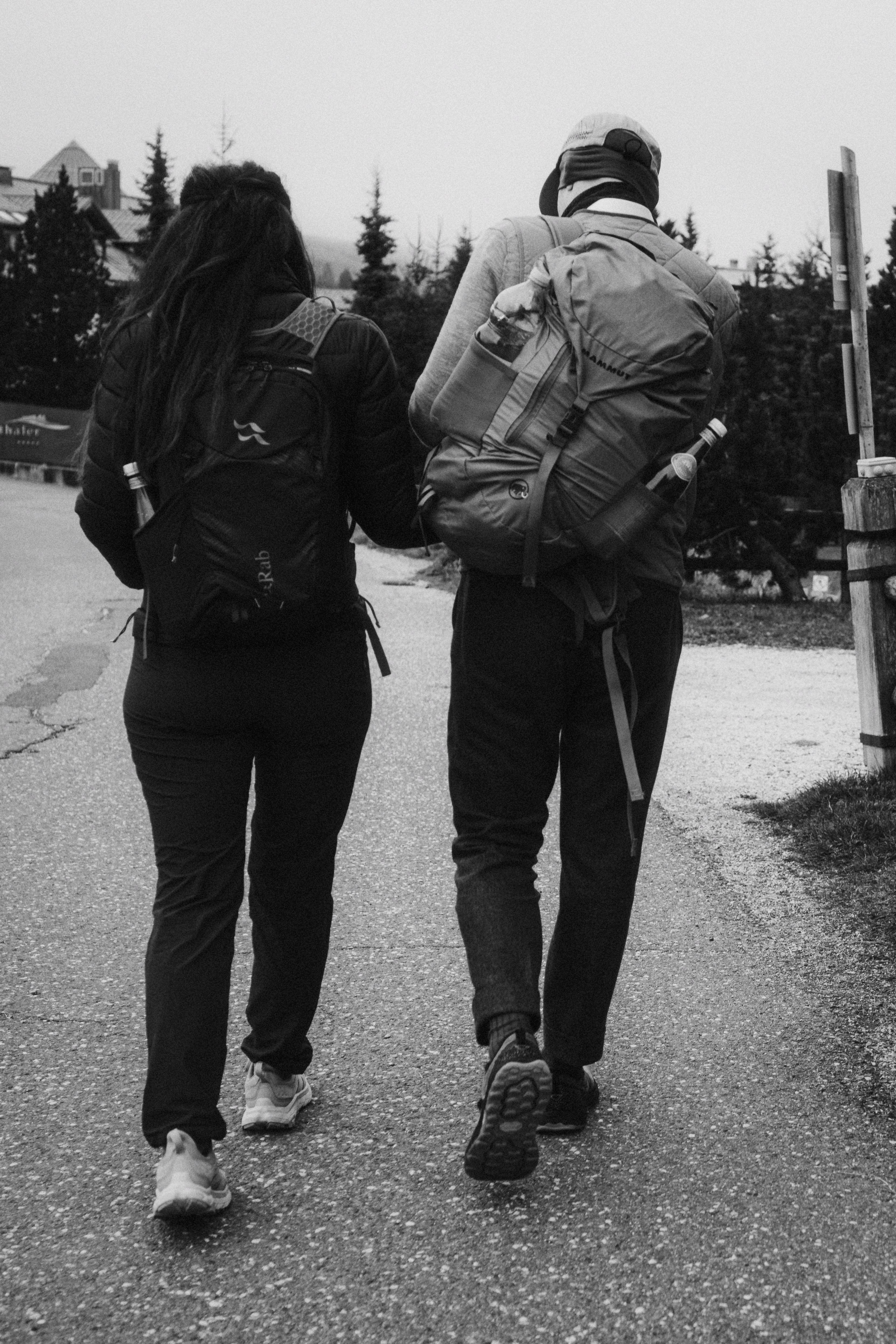
Tierser Alpl was out. The shared rooms were out. Two days became one, and we went to Seiser Alm instead. We wore masks together in the car and cable car.
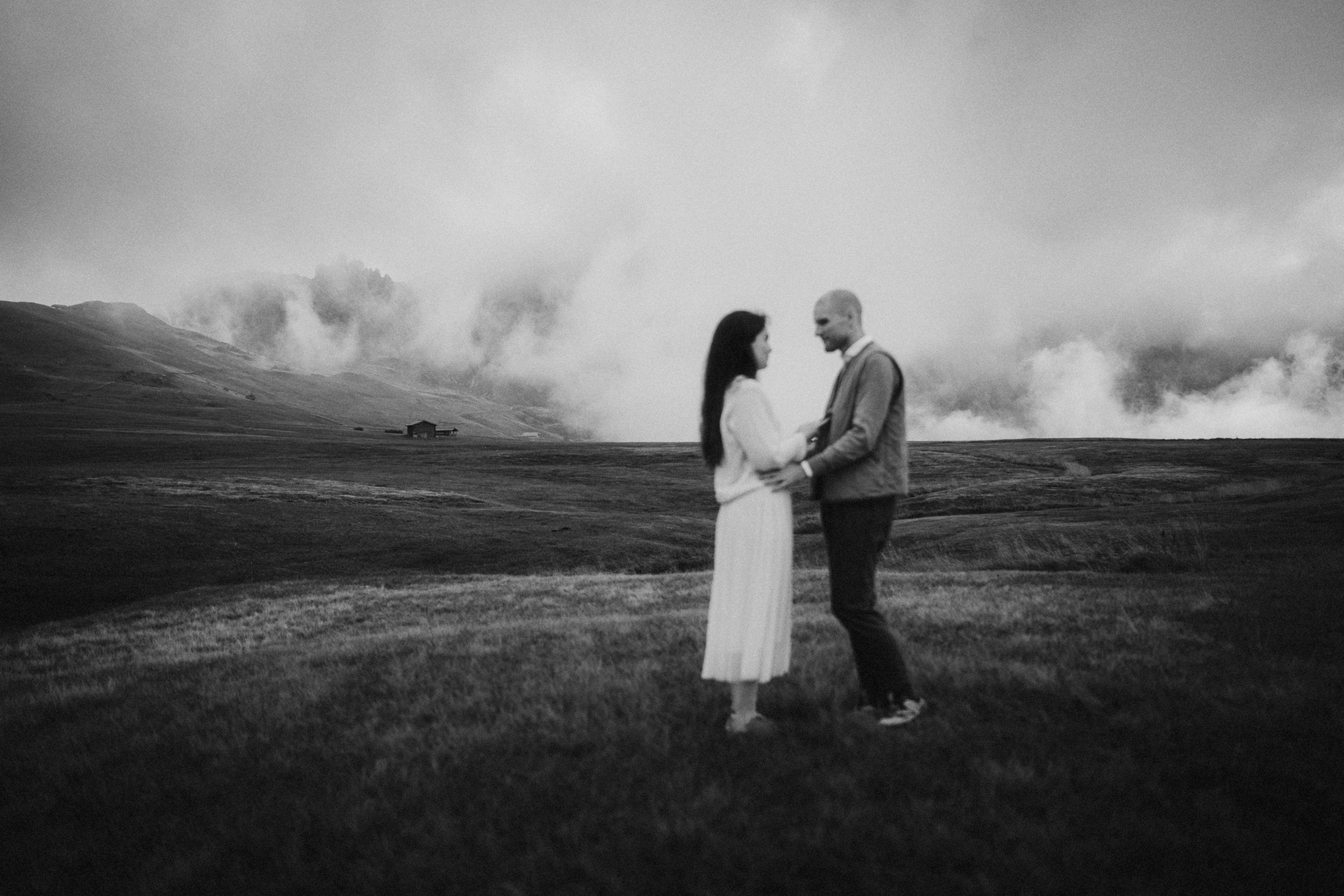
The change mattered. Nobody needed to pretend it did not. Yet the day still held city scenes, mountain paths and the private words they had written for each other. During their vows, the Dolomites appeared through the cloud for roughly five minutes and disappeared again shortly afterwards.
Their elopement was not free because disruption could not touch it. It was free because its meaning was not tied to one route.
How many hours does an elopement day need?
An elopement can be one quiet day or several very different ones. It can be planned around light and locations or around a ceremony and lunch. It can contain hours of portraits, very few portraits or both documentary time and deliberately made images.
There is no useful number before the shape of the day is clear. A few hours may be exactly right. A full day may give the ceremony, travel, food and quiet moments room to exist without competing. Several days may separate the wedding from a more deliberate portrait journey. The coverage follows the experience you want, rather than deciding its size in advance.
It can be spectacular. It can also be two people reading.
The most impressive sequence of images is not automatically the right version. The useful question is whether you would still want to live that day if nobody were watching it.
If you are still working that out, the full stories of Kris and Ilya and Jana and Steffen are here. They are two answers. They are not instructions.
If you want to talk about your own day, write to me with the unfinished part. A place, a date, a feeling or something you definitely do not want. I can work with that.
Ready to talk about yours?
You don't need to have finished reading. If something here has been useful, that's enough.
Let's talk