DOCUMENTARY STYLE WEDDING PHOTOGRAPHY FOR COUPLES WHO DON’T WANT TO PERFORM
A personal look at documentary and cinematic wedding photography, deliberate direction, camera discomfort, and what an honest portrait can ask of you.
About once a year, Jana and I put ourselves on the other side of somebody else’s camera.
I like it. We get to do something together that we would not normally do, and because I love photography, I am obviously curious about what another photographer will see.
I am also probably not the easiest person to photograph.
My brain is busy. How do I look right now? What is my stomach doing? Where are my hands? Is my nose always this present? I know exactly how unhelpful those thoughts are, and I still have them. It takes me time to stop checking myself and return to whatever is actually happening with Jana.
That is one reason I keep doing it. I never want to forget that you can want the photographs, enjoy being there, and still become painfully aware of yourself once somebody points a camera at you.
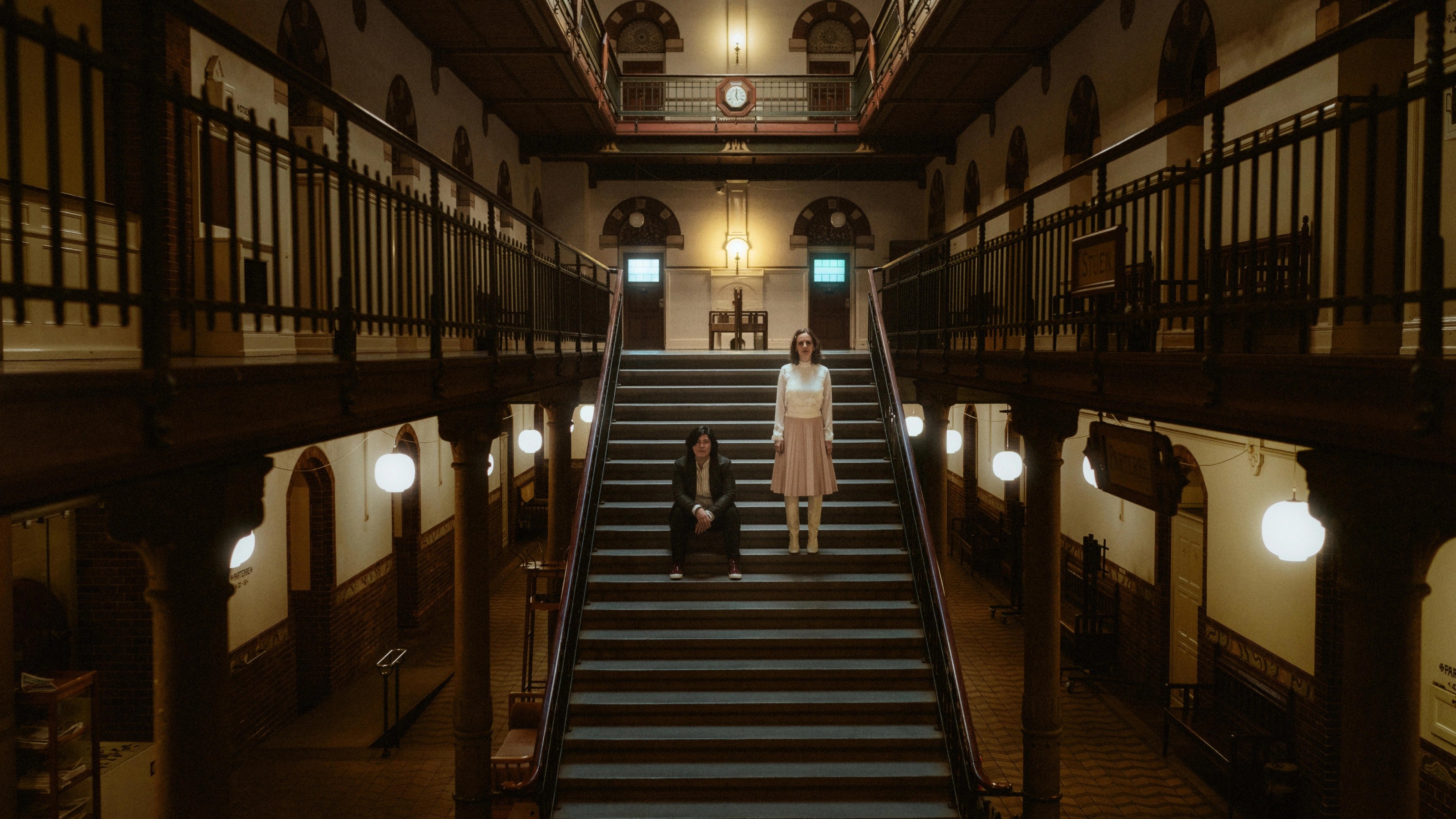
I photograph elopements for couples drawn to documentary style wedding photography, but documentary is only part of what I do. I observe a day as it happens. I also construct portraits deliberately, sometimes down to very small details.
I can construct the frame. I do not want to manufacture the relationship inside it.
MAYBE YOU ARE NOT CAMERA SHY
I rarely hear somebody use the actual words “camera shy.” What I hear is that they do not like photographs of themselves. Or that they are worried about being posed too much. Or that they have no idea what to do once they are standing in front of the camera.
Sometimes couples worry that they are not cool enough for me or for the photographs they have seen on my website.
That last one always gets me.
You do not need to be cool enough for me. The people in those photographs did not arrive as finished images. They had their own doubts, habits, bodies, and ways of being together.
If somebody has shown you every careless photograph ever taken of you, without selection, consideration, or a decent eye, you may eventually decide that you always look bad. But a photograph is one fraction of a second, selected by another person. That is all.
Unphotogenic is a difficult word for me because I do not believe that people are unphotogenic. We have familiar ways of seeing ourselves. We have learned beauty standards. We know which parts of our bodies we are supposed to dislike. I still catch myself doing it when I see a photograph of me.
My nose. My stomach. This bit. That bit.
Does knowing that make the noise disappear? No. It certainly does not for me. But I do not think the answer is teaching you how to hide every part of yourself that you have learned to judge.
THE DOCUMENTARY WEDDING PHOTOGRAPHER IS PART OF THE PHOTOGRAPH
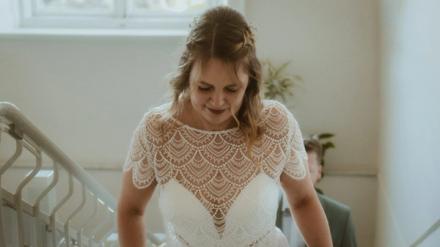
A good portrait is not only the result of light, composition, timing, or an expensive camera. It also depends on the chemistry between the people on both sides.
Trust changes a photograph.
So does the feeling that the person looking at you is not waiting for you to fail. Openness is easier when you do not feel examined. Choosing a documentary wedding photographer, or any photographer, is about more than choosing an editing style.
The photographer also decides which fraction of a second becomes part of your story.
When I edit, I try to imagine that the person in the photograph is me. Would I like myself in this image? Would I feel seen, or would I feel exposed?
That does not mean I only choose conventionally flattering wedding photos. A photograph can be strange, quiet, funny, tired, physical, or unresolved and still feel right. Looking perfect is not the same as being seen well.
I cannot know exactly what another person looks for when they see themselves. Nobody can. I can still choose with attention instead of treating every technically successful frame as something you need to see.
DOCUMENTARY STYLE WEDDING PHOTOGRAPHY IS ONLY PART OF THE STORY
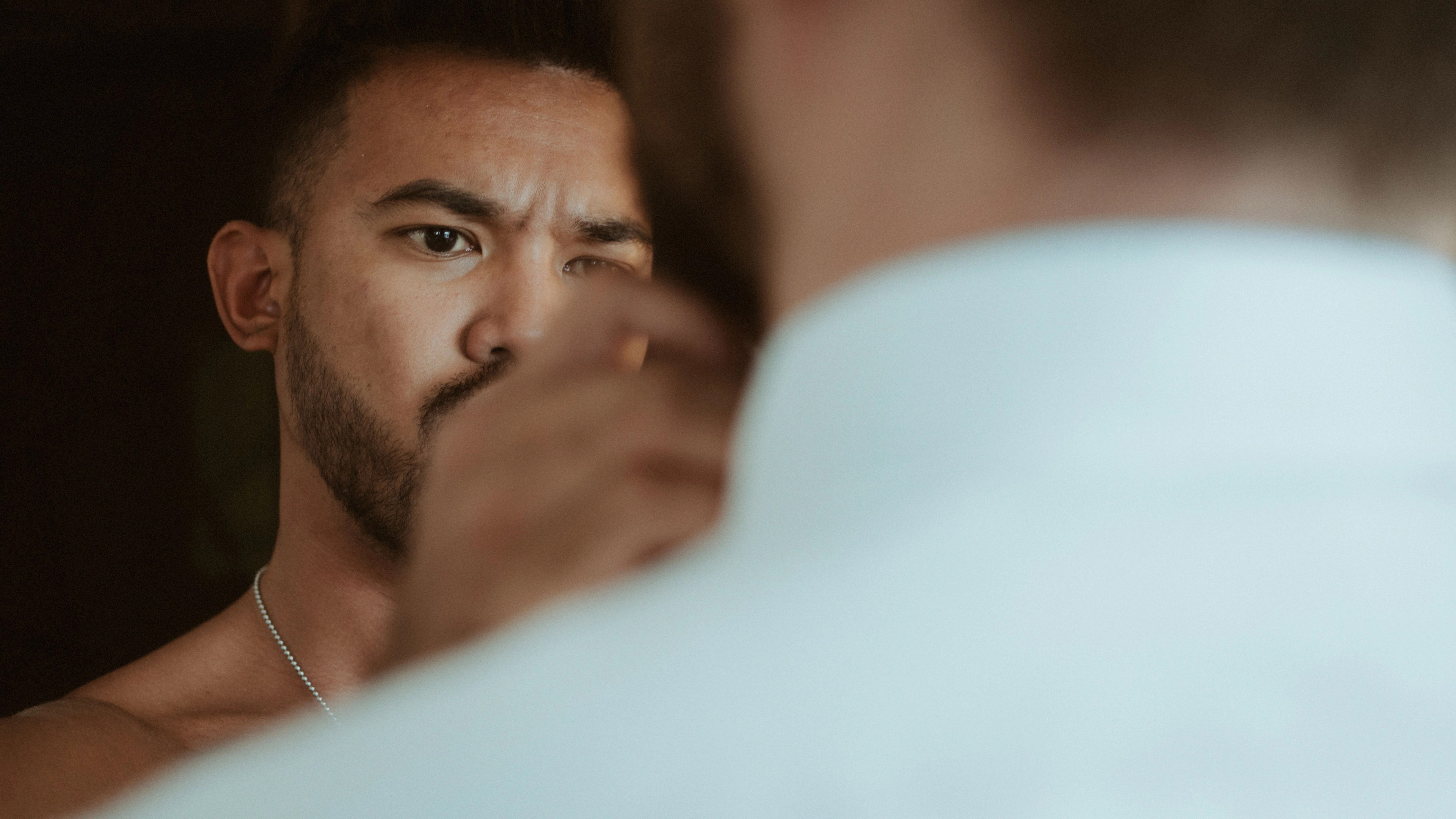
Documentary wedding photography is often described as if the photographer does nothing. No influence, no direction, no plan. Just an unobtrusive observer blending into the background while candid moments unfold.
That description does not fit all of my work.
During most of an elopement, I follow what is already happening. I do not want to interrupt a conversation, a quiet moment, or a sudden change in the energy because I have imagined a cleaner version of the photograph.
I look for laughter, of course. I also look for stillness, tension, uncertainty, fatigue, and those few seconds in which somebody disappears into their own thoughts.
Portraits are different.
That is where deliberate construction enters my work. I may choose the exact light, distance, body position, direction of movement, or placement inside the frame. Sometimes the construction is precise enough that moving a hand or turning a face slightly changes the entire image.
I might ask you to close your eyes. I might ask you to walk from one place to another. I might place one of you inside hard light and use the other body as part of the composition.
That is direction from the photographer. Pretending otherwise would be dishonest. The question is not whether I influenced the photograph. It is what I influenced.
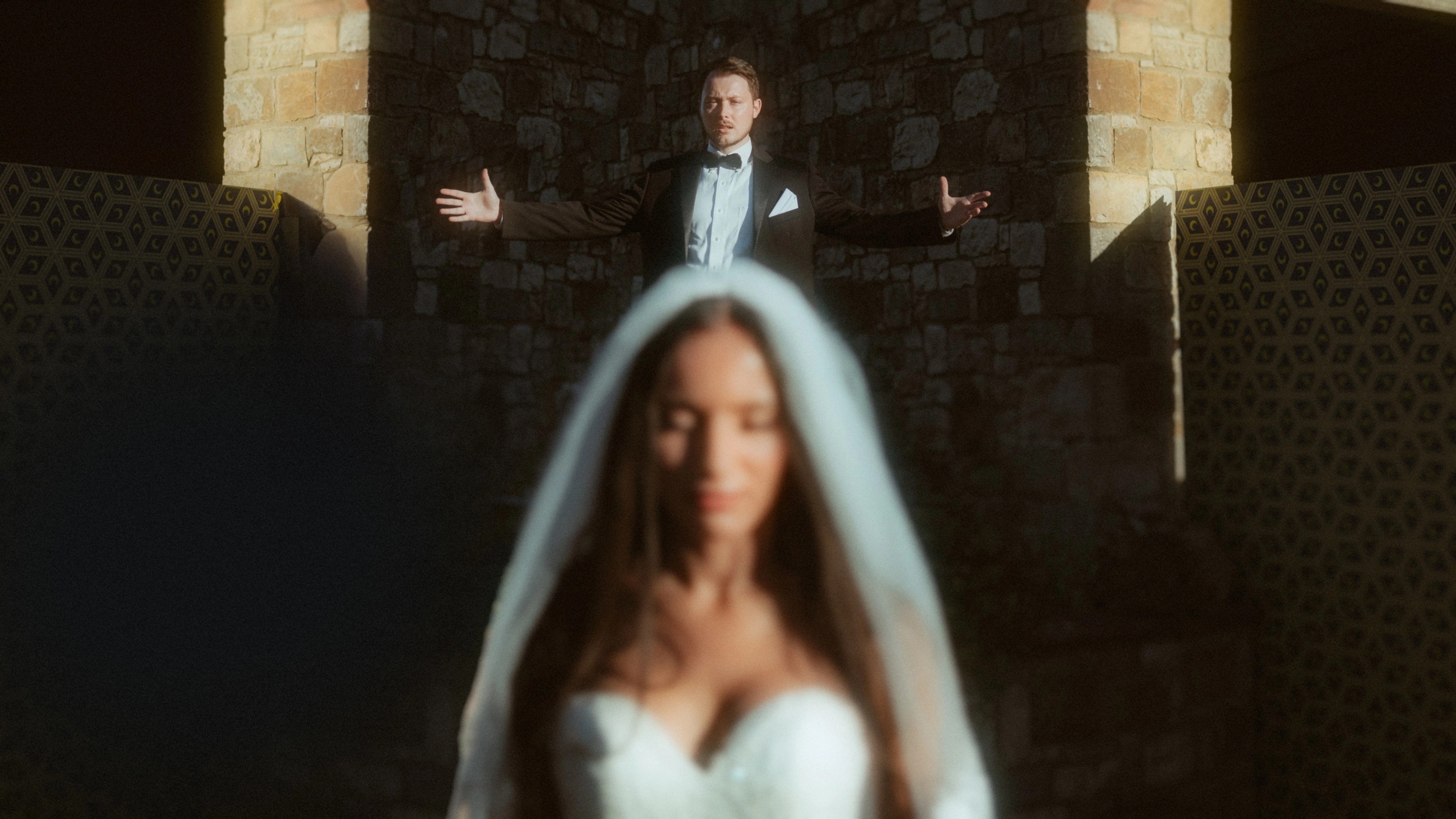
THE FRAME CAN BE BUILT WITHOUT THE FEELING BEING FAKE
I often begin with a loose concept, a moodboard, a feeling, or a handful of reference images. I do not arrive with a fixed list of poses that every couple has to reproduce. I am not walking into the day without ideas either.
I want enough structure to begin looking.
Sometimes I know what I am trying to build. Sometimes the first idea is wrong. The obvious photograph may be fine, but the more interesting one often appears directly afterward.
The instruction ends. You stop tracking what I asked you to do. Your body relaxes. You turn back toward each other. Something small changes.
That frame may be the strongest one.
It exists because a constructed photograph came first, but it is no longer fully controlled by me.
I am not interested in proving that a portrait was untouched. I care whether it feels specific to you and whether there is still life inside it. “Unposed” is not a badge I need to earn.
DOES DOCUMENTARY WEDDING PHOTOGRAPHY MEAN NO DIRECTION?
No.
There is a strange idea that “true documentary” or “pure documentary” requires the photographer to never help, move, suggest, or touch anything. I used to be much stricter about this myself.
If somebody had their hands full and was struggling to open a door, I might once have thought that helping would interfere with the moment. Now I think: why should I make somebody’s day unnecessarily difficult just to protect my own definition of photojournalism?
That is a rule taking itself too seriously.
The documentary approach still matters during an elopement. Most of the day does not need to be constructed. Getting ready, travelling, waiting, speaking, eating, walking, and whatever happens between the planned parts already contain more than enough.
I can observe one part of a wedding day and deliberately construct another. I only need to be honest about which one is happening.
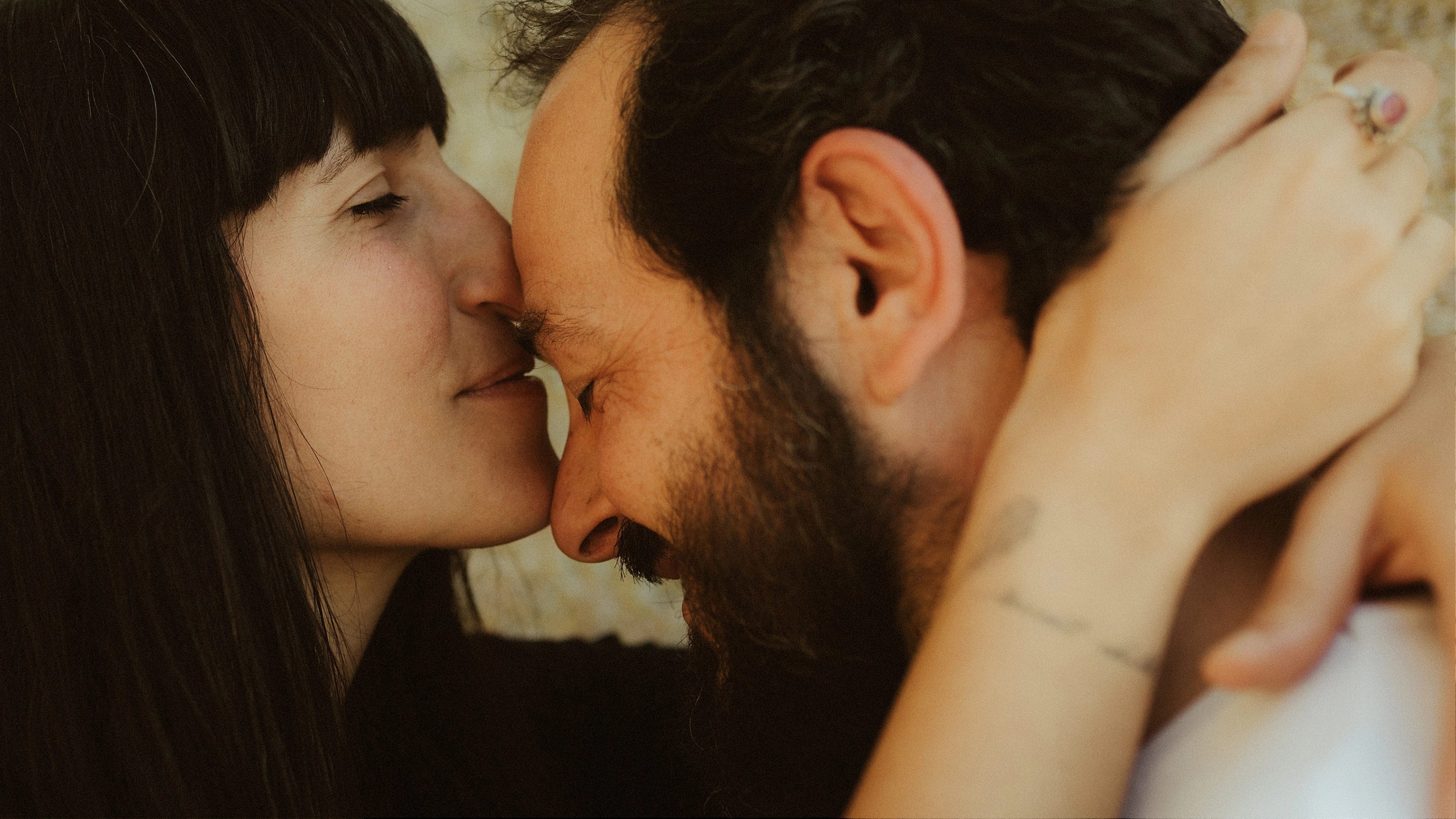
THE MOMENT BEFORE THE KISS
I generally do not want a kiss on command.
That does not mean I never give explicit instructions. I do. Asking somebody to produce an emotion and asking somebody to enter a visual situation are different things.
If you want a photograph of a kiss, I might ask you to think about the tension before your first one. That moment when you knew what was about to happen, but your lips had not touched yet.
That is a direction, but it is not a request for a specific facial expression.
What you do with the thought is yours. Maybe you laugh. Maybe nothing happens for a while. Maybe the space between you becomes more interesting than the kiss itself.
The moment before a kiss often interests me because it still contains a possibility. It has not finished the sentence yet.
If something real begins, I try not to interrupt it. Sometimes I see another possible picture while it is happening, but stopping you to manufacture that second image would destroy the first moment.
I can try to return to something similar afterward. Sometimes it works. Sometimes it does not.
If it does not, the moment was still more important than the photograph.
NOT EVERY FAMILIAR POSE BELONGS TO YOU
There is a line between constructing a portrait and forcing different couples into the same borrowed gestures.
Ten years ago, there was a fucking piggyback trend everywhere in wedding photography. I kept seeing photographs of one partner carrying the other.
I almost never see adult couples doing that in normal life.
Why did it suddenly happen constantly in wedding photos? Because people had seen the photograph before. Photographers repeated it. Couples recognised it as something people apparently did during a photoshoot.
The problem was not the direction. It was that the direction had fuck all to do with the specific couple.
Before photographing somebody, I want to know how they actually behave together.
Do you hold hands? Are you physically close? Do you kiss often? Are you the kind of couple who sits with some distance between you but always keeps one foot touching?
A deliberately built portrait can still begin with those answers. Construction becomes empty when the image matters more than the people inside it.
CANDID MOMENTS ARE NOT MAGICALLY UNINFLUENCED
A lot of supposedly candid wedding photography is not entirely candid.
That is not automatically dishonest.
The couple may have been placed in good light. They may have received a prompt. The photographer may have chosen the environment because they already knew what kind of image it could produce.
There is always somebody behind the camera making decisions about composition, distance, timing, and selection. Even blending into the background is a decision about how to work.
Pretending that candid photos simply appear without authorship does not make them more authentic. It only hides the photographer’s role.
What matters is whether the direction creates space for something real or asks you to imitate something that was never yours.
Traditional wedding photography, editorial wedding photography, photojournalistic wedding photography, reportage, candid, documentary. The labels help people find and understand the work. They become less helpful when we start defending them instead of making photographs.
My rule, if it is a rule, comes from a Bane song: reasons, not rules.
Every decision should have a reason. That matters more to me than the category.
CINEMATIC WEDDING PHOTOGRAPHY IS MORE THAN A FILM LOOK
Cinematic is another term that has been ridden to death.
I struggle to define it. Maybe that is because it is not one technique. It is composition, colour, focus, movement, distance, sequence, and whatever exists just outside the frame.
Sometimes I see a photograph and it feels like somebody paused one of my favourite films. Other photographs have grain, dark colours, and every visual signifier of cinema, but they do not create that feeling at all.
A film look alone does not make a photograph cinematic.
People compared my work to Wong Kar Wai before I had properly encountered his films. I did not know enough about his work to imitate it, which is still funny to me. Whatever they recognised was already there before the reference became conscious.
For me, cinematic wedding photography also includes authorship. It can mean waiting for something to happen. It can also mean arranging bodies, light, space, and distance until the frame feels right. Hard light. An unusual crop. A face partly hidden. A picture that is less immediately safe.
I sometimes need enough time to make things a little strange.
Strange does not mean making unusual photographs for the sake of it. It means getting beyond the expected image. Letting the first idea fail. Looking again.
Sometimes that produces a photograph nobody could have specified beforehand. I am not sure what else to call the feeling when it works. “Cinematic” gets close.
AT AN ELOPEMENT, THERE IS NOWHERE TO DISAPPEAR
At a large wedding, a photographer can disappear into the crowd. There are guests, conversations, speeches, a wedding party, and dozens of things happening at the same time.
At an elopement, there may be no crowd to disappear into.
You will know that I am there. The camera may even feel more present because it is one of very few witnesses. Promising that you will never notice me would be easy marketing, but it would not always be true.
I do not need to become invisible. I need to become someone whose presence does not make you perform.
I talk with my couples. I am part of the human situation rather than hovering silently at its edge. Mirrorless cameras help because you do not hear every exposure, but quiet equipment does not create trust. People do.
Couples have told me that they stopped noticing me as a photographer while still feeling that I knew exactly what I wanted. I like that combination. Clear without taking over. Present without turning the entire day into a photoshoot.
At an elopement I have to know when my presence should shape a frame and when I should leave the moment alone.
AN ELOPEMENT DOES NOT REMOVE EVERY KIND OF PRESSURE
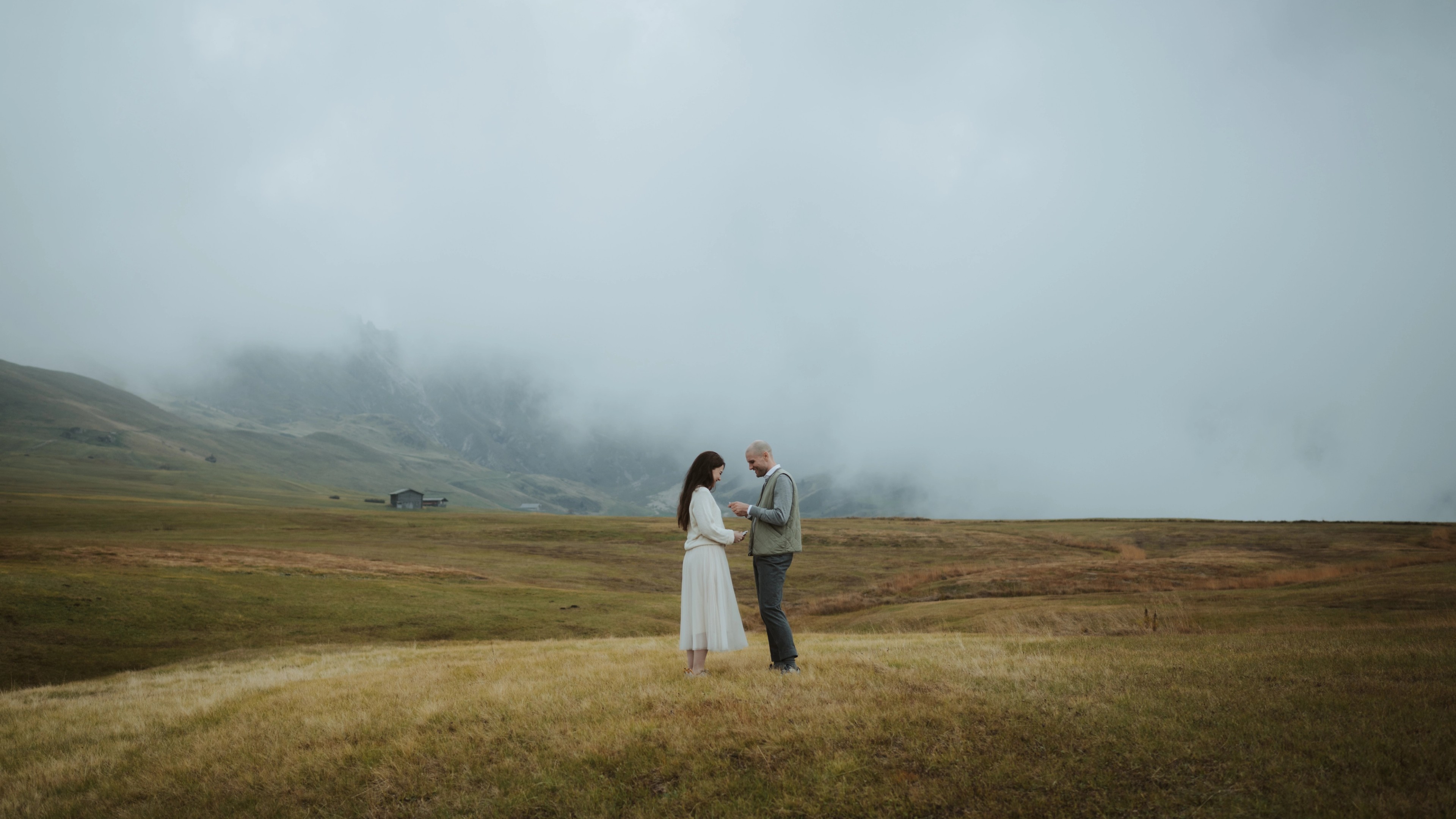
A small wedding day can make it easier to remain yourself because you are not constantly considering an audience.
There may be no room full of people waiting for the right reaction. No expectation to smile at the correct time. No need to hold back tears, language, touch, or whatever else might make somebody uncomfortable.
You can make decisions because they belong to you.
But an elopement does not free anybody completely from social pressure. You may still worry about the camera. You may think about how people will judge the photographs later. You may become aware of strangers noticing that you are a wedding couple.
You may still hear every stupid thing the world has taught you about how love, bodies, and weddings are supposed to look.
A smaller day does not magically erase any of that.
It can give you more room, though. Fewer people to perform for. More time to notice what is actually happening. More time to build a photograph, let it fail, and look again.
REASONS, NOT RULES
I do not need you to arrive knowing what to do with your hands. You do not need to be naturally confident, visually perfect, effortlessly candid, or cool enough for the photographs on my website.
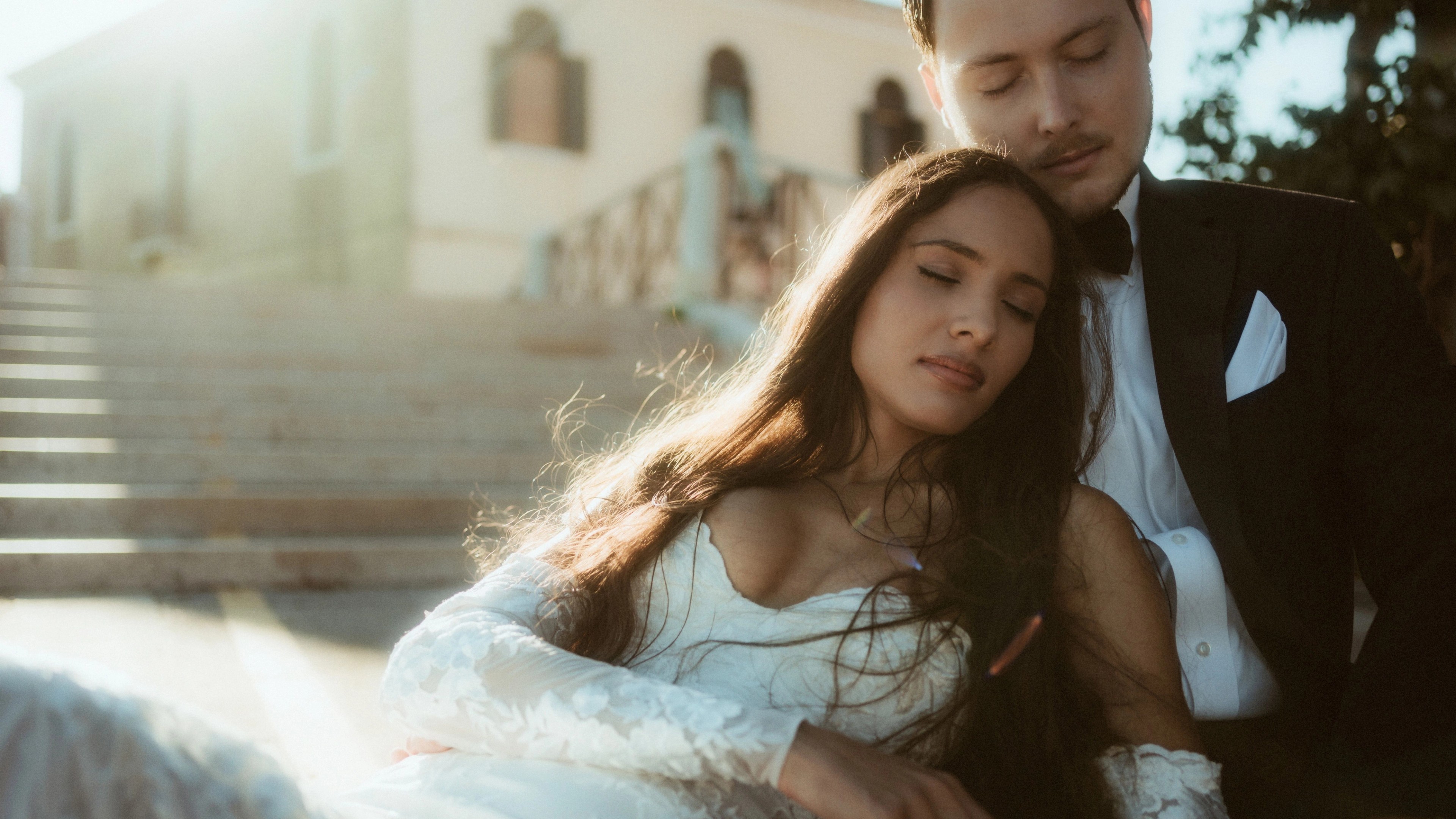
I may observe what happens without interfering. I may also choose the light, position your body, ask you to close your eyes, or have you repeat a movement until the composition works.
Sometimes I document. Sometimes I construct. Often the strongest photographs appear somewhere between those two things.
When I am the one in front of the camera, I know all of this. I know what the photographer is doing. I know nothing terrible is happening. My head does it anyway.
It takes a while.
Ready to talk about yours?
You don't need to have finished reading. If something here has been useful, that's enough.
Let's talk