
WHAT IS AN ELOPEMENT?
What is an elopement, and when does it become a small wedding? An honest definition based on who the day is really being planned for.
AN ELOPEMENT CAN BEGIN AFTER THE WEDDING
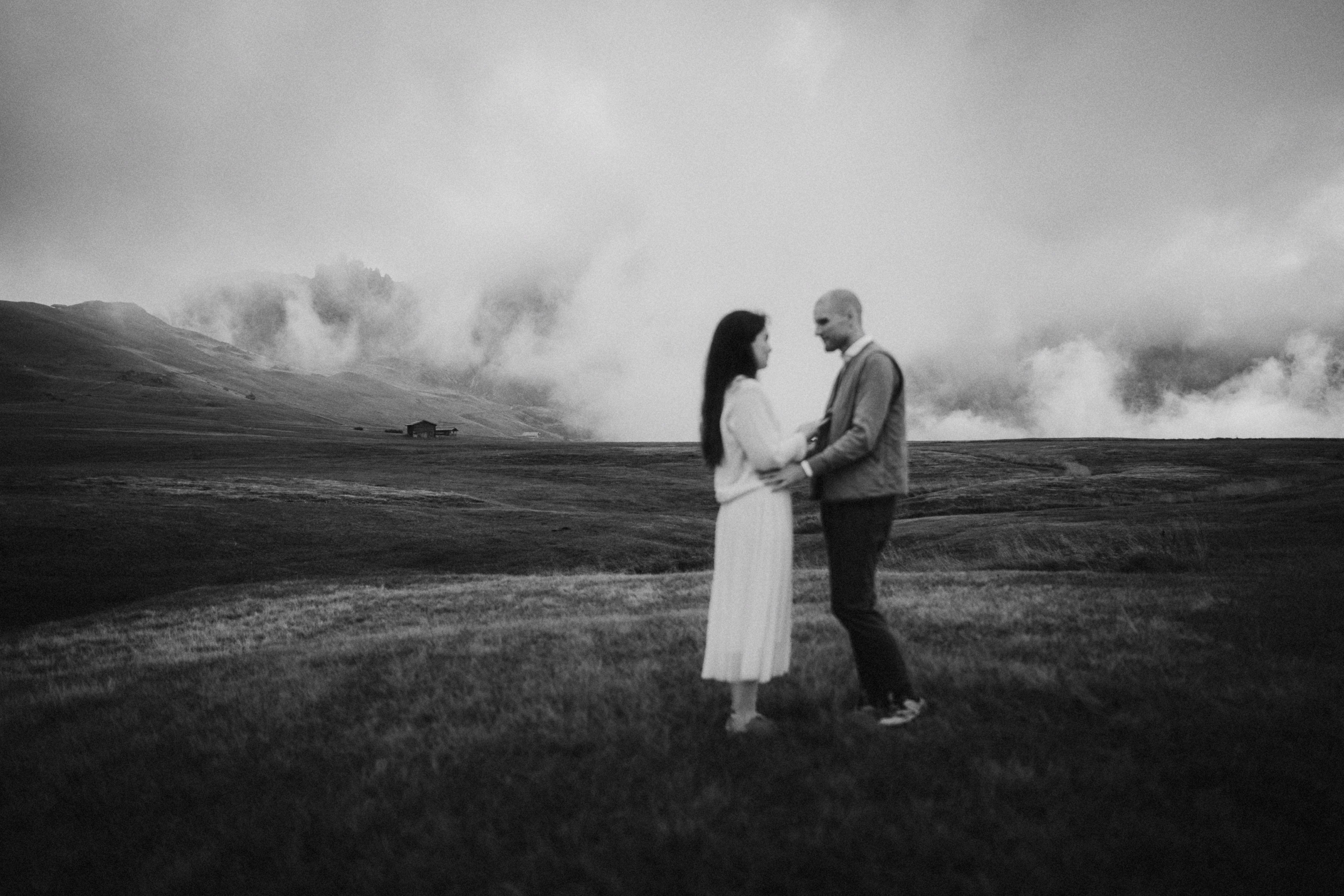
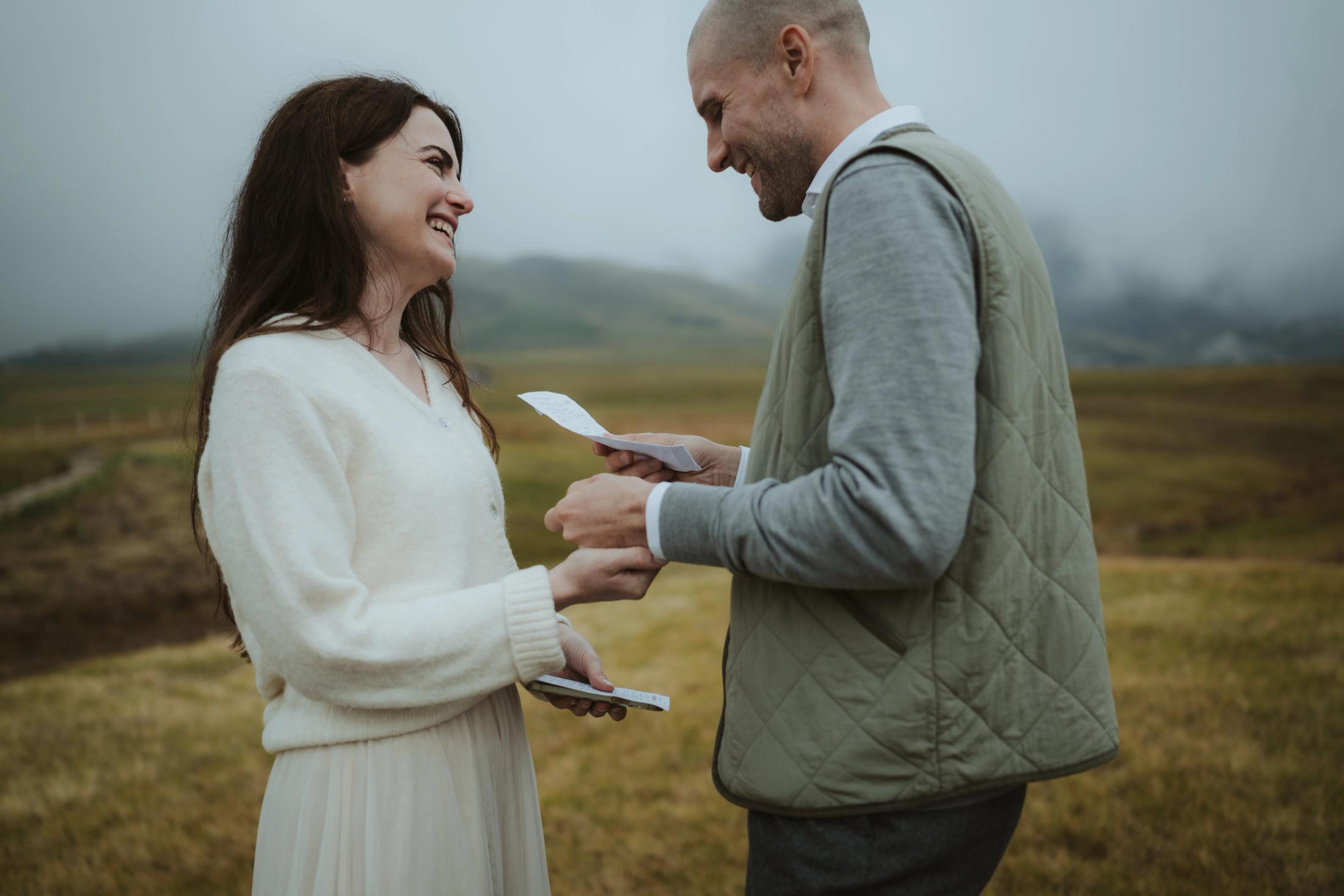
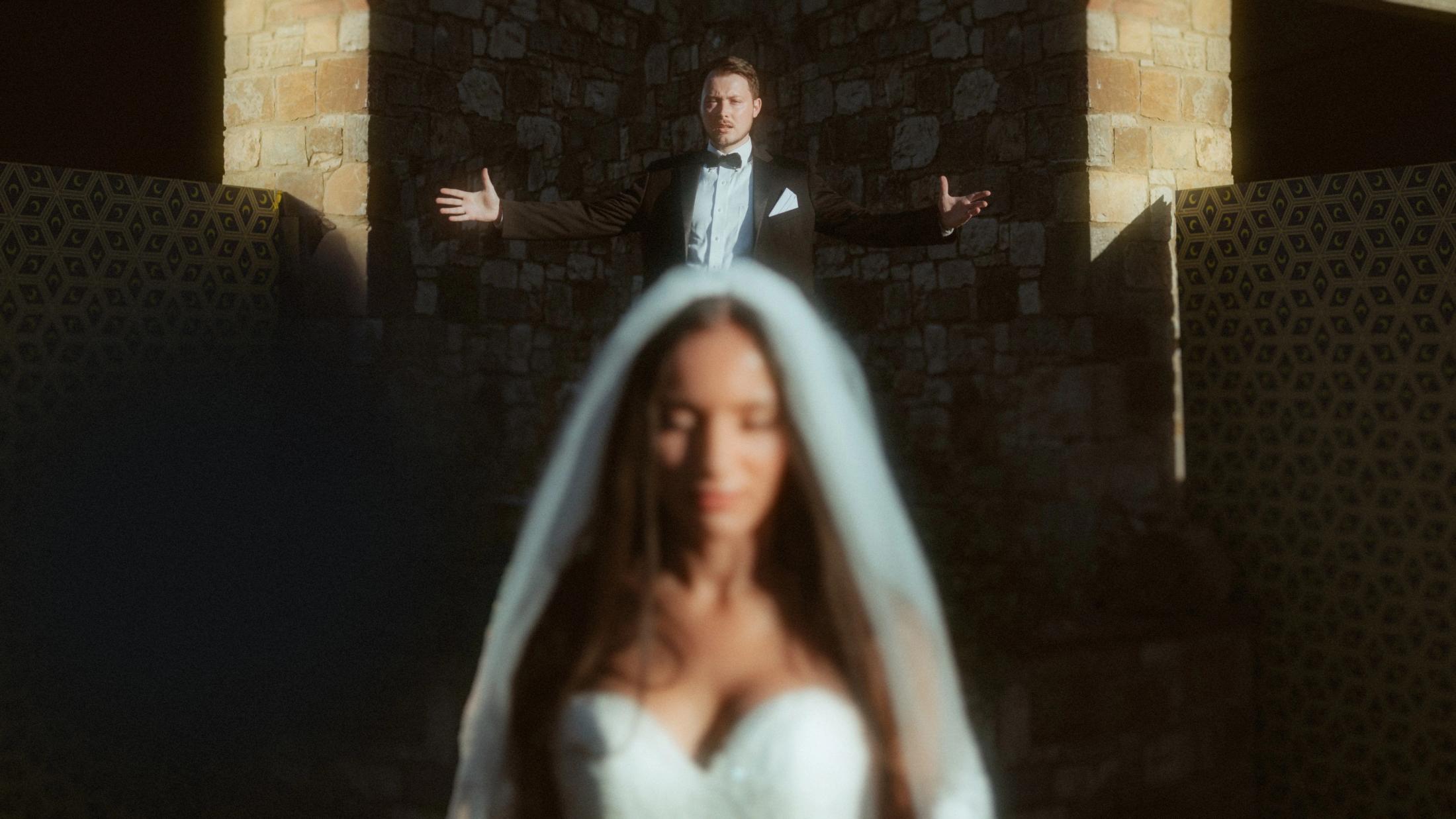
Jana and Steffen were already married when I arrived in Bolzano. The legal ceremony had happened on another day, although originally they had asked me to photograph that part: a registry office, a small group of family and friends, the official version of getting married.
During our conversations, I gave them a small piece of homework. What would this look like if I did not photograph the official wedding day? What would they do if time was not the problem and they could make the day entirely their own? Their answer moved the meaningful part of the wedding into the Dolomites. The plan became time in the mountains and private vows with nobody else listening.
Was that still a wedding, even though the paperwork was already finished? Of course. Was it an elopement? To me, yes. The legal act made them married, but the day in the mountains held the part they had chosen for themselves. That is probably the clearest place to begin, although I should admit that I do not have a perfectly clean definition for what comes after it.
WHAT DOES IT MEAN TO ELOPE TODAY?
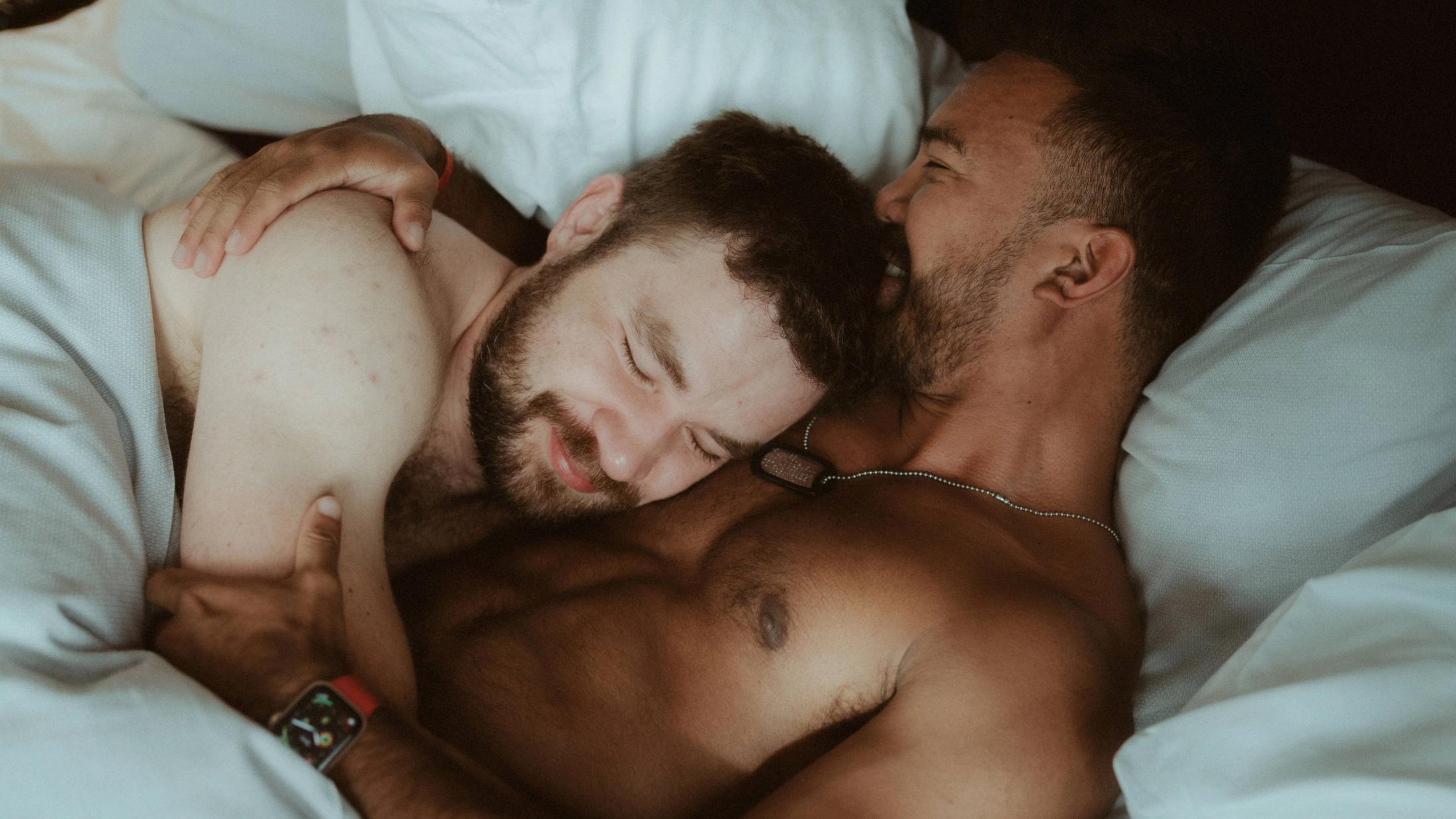
Traditionally, to elope meant running away to marry in secret, often without family approval. The modern definition is wider. You can choose to elope and plan it months ahead, your family may know about it and a few people may even be there. Couples elope in registry offices, cities and landscapes, but the location alone does not define the experience. For me, an elopement is a wedding experience built around the two people getting married rather than an audience around them.
Usually, that means the couple is alone. Not because solitude makes the day more real, but because it removes many of the decisions that come with hosting other people. Where do the guests sit? What will they eat? Will somebody be bored? Can everyone manage the walk? How long can we disappear for photographs? Should we change the plan because a relative will not like it?
Those are not stupid questions. They are part of caring for people, and for some couples that care is one of the reasons to have a wedding in the first place. They are also the point where a day can begin to change shape. An elopement keeps returning to a different question: what matters to the two of you? That matters more than whether it resembles somebody else's day.
HOW MANY GUESTS CAN YOU HAVE AT AN ELOPEMENT?
I do not have a useful number for you. I have tried to find one, because a number would make this considerably easier to explain, but every version starts to feel arbitrary. Four guests do not automatically make something an elopement. Ten guests do not automatically turn it into something else. A rigid limit sounds clear, but it does not explain what is actually happening when people want to elope.
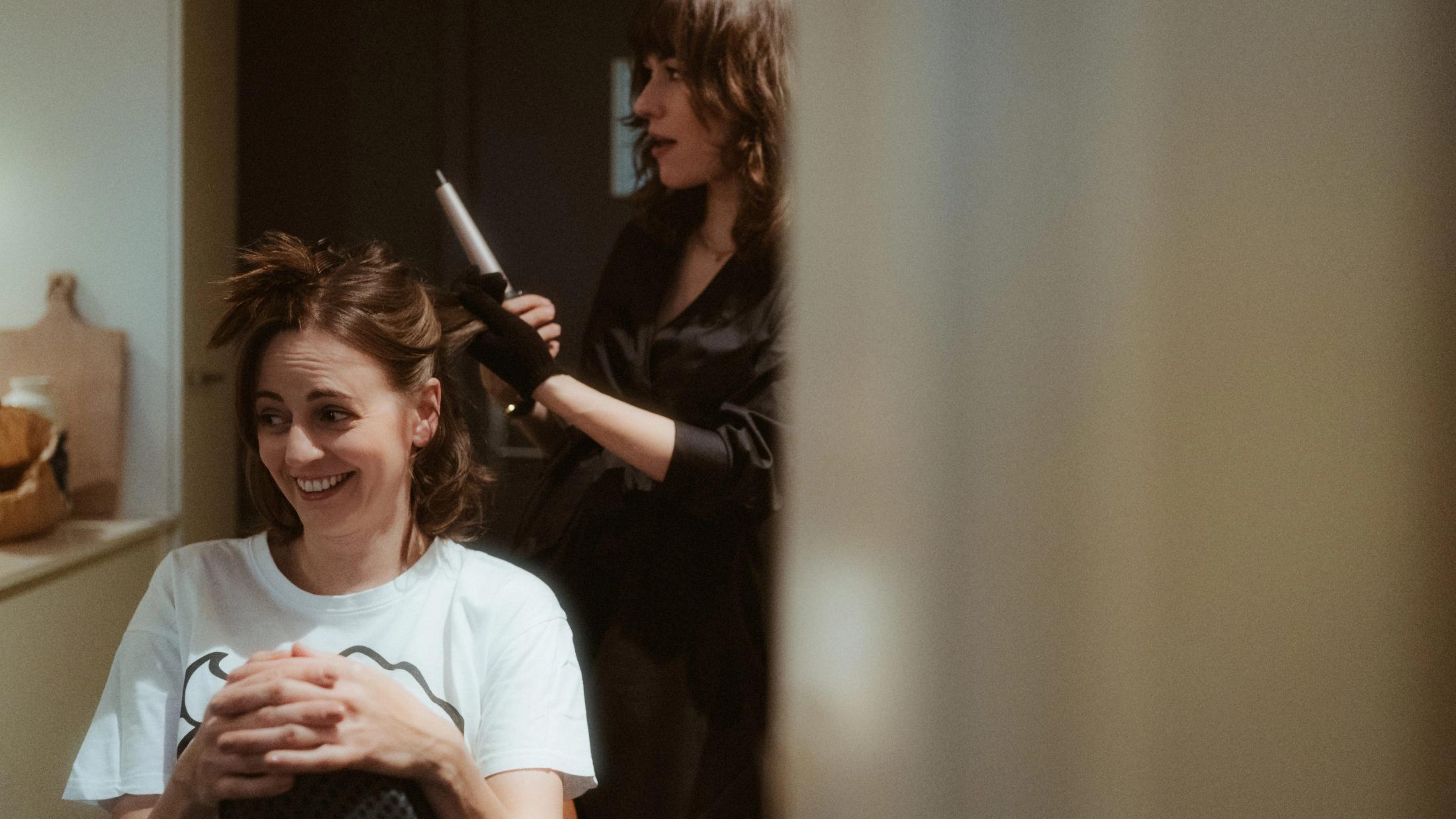
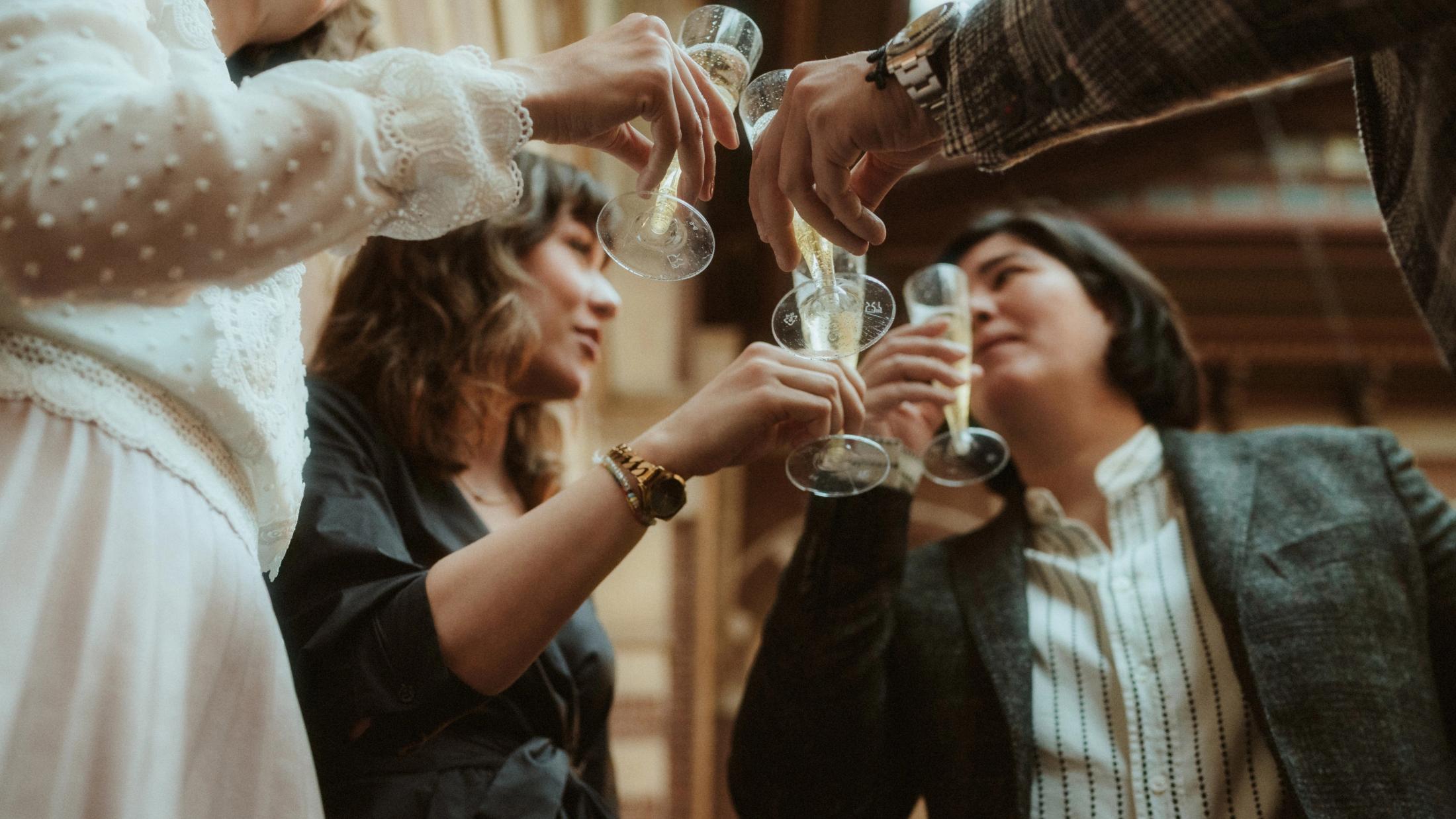
The better question is whether the guests are part of the experience or whether the experience is being organised around them. Ari and Pia travelled to Copenhagen after seventeen years together. Two friends joined them on the wedding day. They were witnesses, helped with hair and makeup, held things during the portraits and became part of the small group around them.
Nothing was being performed for those friends, and nobody had designed a programme to keep them occupied. Their presence did not pull the day away from Ari and Pia. The next day, we met again for a separate portrait session. No ceremony was left to document and no guests needed anything. There was Copenhagen, winter weather and enough time to make photographs that were darker, more graphic and less obvious. Both days belonged to the same elopement.
Now imagine a different situation. The route changes because the guests cannot manage it. The timing is built around catering, activities are planned so nobody gets bored, and the couple starts spending a meaningful part of the day making sure everybody else is comfortable. Is that wrong? No. It may be exactly the celebration they want. It is simply a different kind of day.
ELOPEMENTS VS SMALL WEDDINGS: WHAT ACTUALLY CHANGES?
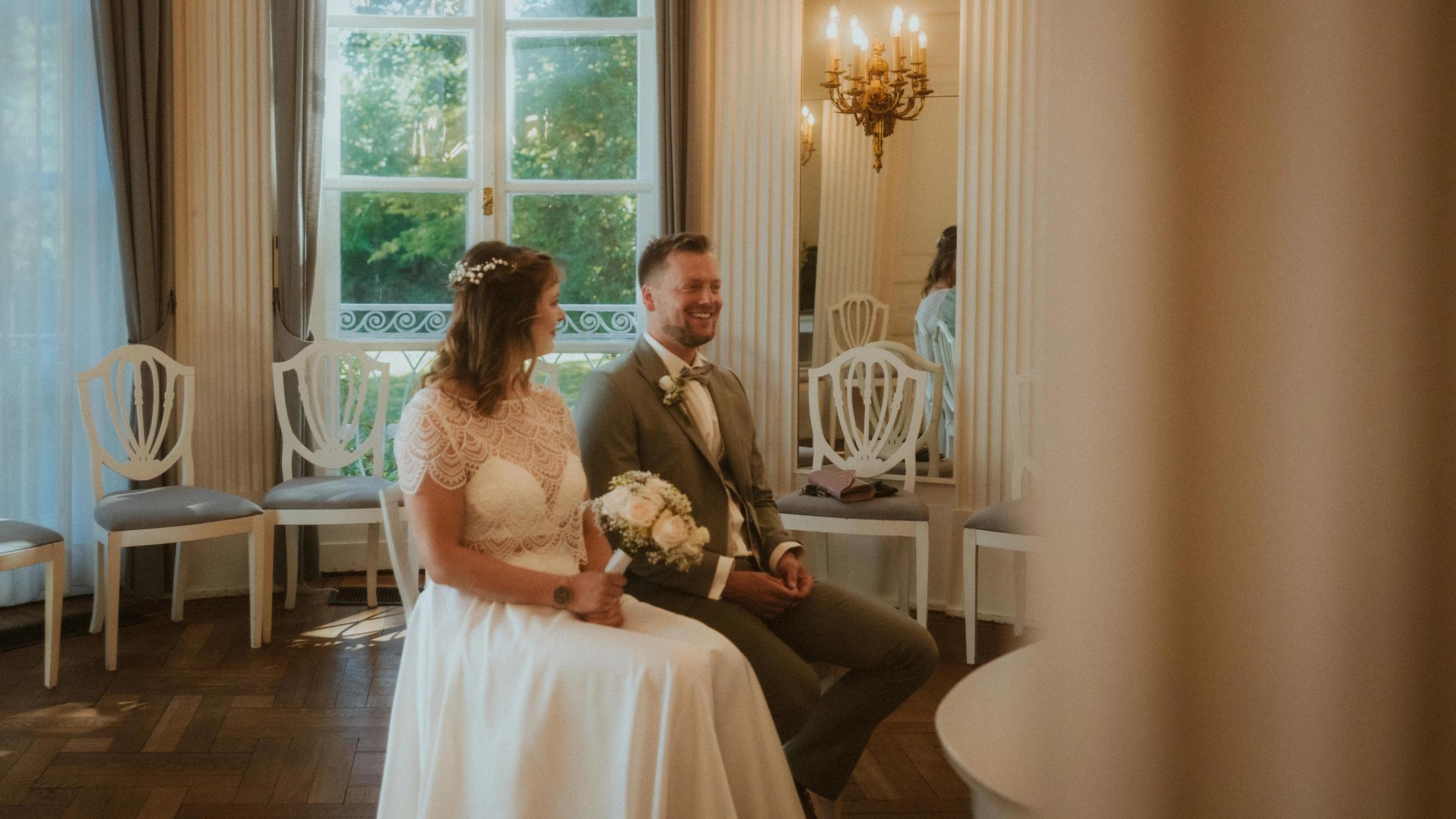
The difference is not that an elopement is meaningful and a wedding with guests is superficial. That would be nonsense. Some people love bringing their closest people together and draw energy from a room full of conversation. Caring for their guests is not an obligation they secretly resent. It is part of what they want their wedding to be, and it is not my place to decide that one form of marriage is emotionally superior to another.
The practical difference is the role the couple takes during the day. Once a couple is hosting a gathering, other people have travelled, dressed, waited and made space for the event, so their needs become part of the structure. At an elopement, the couple does not have to carry that role for most of the day. They can change direction, stay longer, leave earlier, stop for food, walk into bad weather or do absolutely nothing for a while without asking what the room needs from them.
The transition between the two is blurry. I am fine with that. Wedding language is useful when it helps you understand what you want. It becomes less useful when you start planning a wedding around qualifying for the correct label. The difference between eloping and hosting an intimate wedding lives in what becomes the focus of the day, not in a universally agreed guest count.
DOES AN ELOPEMENT NEED A CEREMONY?
No. I have photographed legal ceremonies on the elopement day, couples who handled the paperwork before or after, symbolic ceremonies, private vows without an officiant and days with no ceremony at all. An elopement ceremony can be a legal wedding ceremony, entirely personal or absent. The legal and personal moments do not have to be the same event.
Marriage law depends on your elopement location, where you live and what documentation the authorities require. Sometimes the legal route is simple. Sometimes getting a marriage licence and arranging an officiant becomes months of paperwork. Separating the bureaucracy from the meaningful day is not a lesser version of getting married. You can sign documents at a registry office on a weekday and speak your vows somewhere else, or have a legal ceremony and still keep another day for yourselves. You can also decide that the commitment already exists and that you do not need to create a second ritual for the photographs.
The important part is not whether the day contains the correct wedding ingredients. It is the meaning you give it, and I cannot measure that from the outside.
WHAT ACTUALLY HAPPENS DURING AN ELOPEMENT?
There is no standard elopement timeline that describes every day, but a Hafenliebe day often begins in the morning while you are getting ready. From there, we walk into the day rather than treating it as a long portrait appointment. There may be breakfast, travel, waiting, a ceremony, private words, a walk, bad weather, food or a change of plan that nobody could have scheduled. Eight hours is normal for me, not because every hour needs to be filled, but because time changes how the day feels.
It gives you space to stop thinking about the next item. It lets the obvious photograph happen and leaves enough room to look again. It allows an idea to fail without turning the whole day into a problem. Sometimes an elopement is quiet, sometimes it is physically demanding, and sometimes it happens in a city full of strangers. Sometimes the place you travelled for disappears into fog.
During Jana and Steffen's private vows, the Dolomites appeared through the clouds for roughly five minutes and disappeared again shortly afterwards. I photographed the beginning, then put the camera down for a while and gave them more distance. Being close enough to hear something does not make it mine. That space matters as much as the timeline.
WHAT DOES AN ELOPEMENT PHOTOGRAPHER ACTUALLY DO?
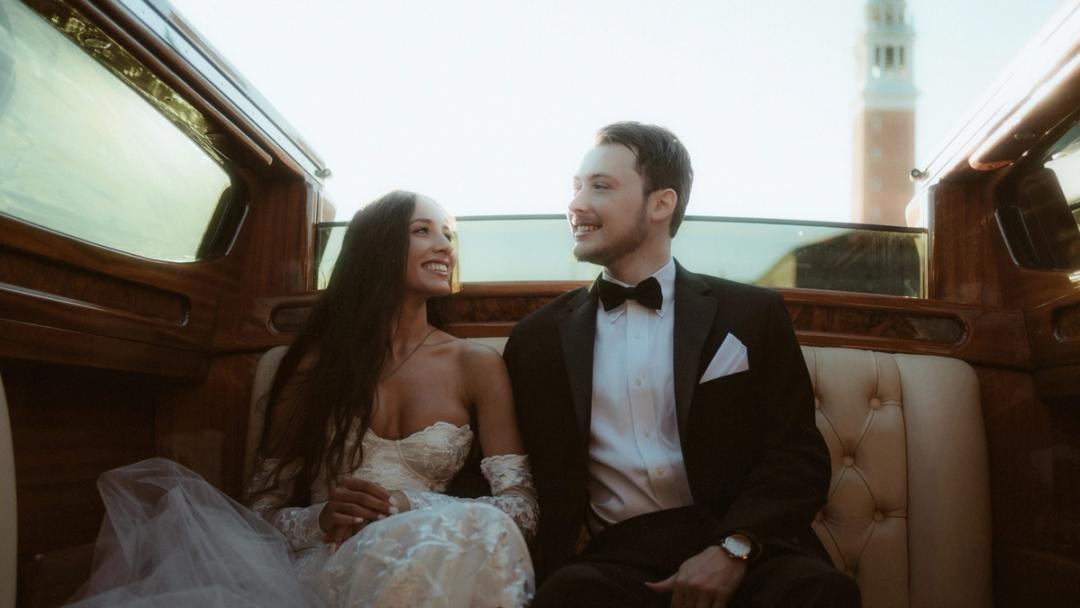
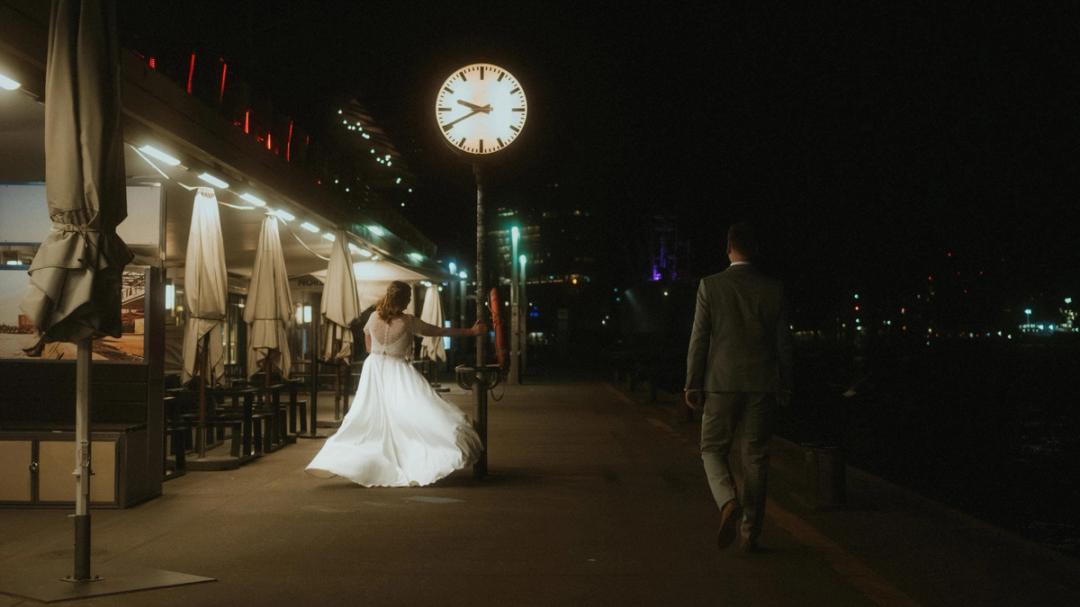
Elopement photography should not turn the day into one long photoshoot. The camera is more visible at an elopement than many photographers like to admit. At a big wedding, I can disappear among guests and conversations. When there are only two of you, there is nowhere for me to vanish. I will be part of the human situation, so the question is not whether you notice me. It is whether my presence makes you feel that you have to perform.
For much of the day, I observe what is already happening. I do not need to interrupt a conversation, a quiet meal or a sudden change in energy to produce a cleaner version of it. Portraits can be different. I may choose the light, move you into a particular place, give you a task or construct a frame quite precisely. If you want more portrait work, I will naturally influence more of the day.
I can build the visual situation. I do not want to manufacture the relationship inside it. An elopement gives us enough time for both things: documentary attention and deliberate elopement photos that could not simply have happened by accident. How much I direct depends on the day you want and how much of it you want to spend making portraits.
IS AN ELOPEMENT RIGHT FOR YOU?
Maybe. Planning an elopement may feel right if the thought of spending most of your wedding day hosting other people makes you tired before you have even begun. It may fit if the legal ceremony feels administrative but you still want to mark the commitment in a way that belongs to you. It may fit if you want to invite a few people without turning the day into a programme for them. It may not fit if gathering your people is the part you are most excited about.
There is nothing brave about choosing an elopement you do not actually want, and there is nothing shallow about wanting a traditional wedding with a room full of people you love. You do not need to elope to prove that your choices are personal. Reasons, not rules. The useful question is not whether your plan qualifies as an elopement. It is what you would keep if nobody else needed to approve the answer.
You do not need a finished plan before you write to me. I am not sure a finished plan is even the most useful place to begin. If you are starting to plan a day and wondering whether you want to elope, look through the Elopements page, sit with the possibilities and tell me what you keep coming back to. We can start there.
Ready to talk about yours?
You don't need to have finished reading. If something here has been useful, that's enough.
Let's talk